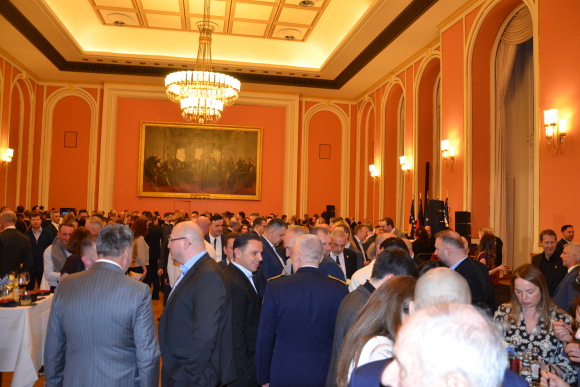
Kosovo’s Coming of Age
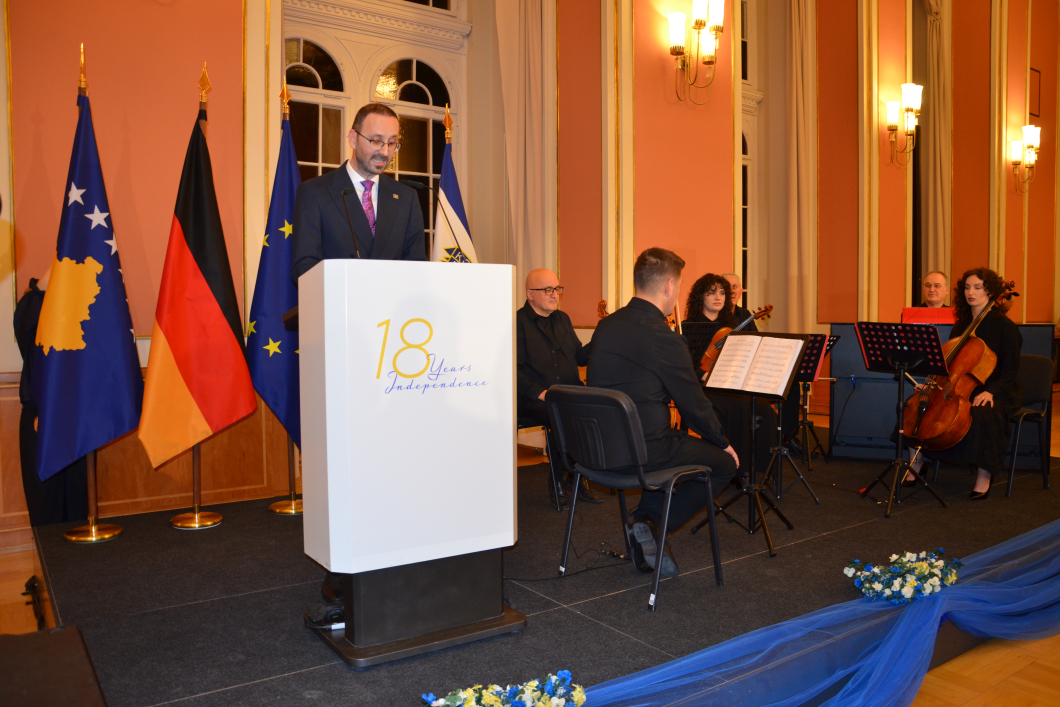
H.E. Dr Faruk Ajeti delivering his address
Germany: pioneering role
“We are profoundly grateful to Germany for its pioneering role in Kosovo policy and for being a driving force,” he added. Eighteen years ago, the small Balkan country founded its own state. “Kosovo has come of age - but adulthood means one thing above all: taking responsibility. Responsibility for our democracy, for our country, for territorial integrity, and for our place in Europe … Our direction is clear: the Euro-Atlantic perspective.”
Artists and athletes
Ajeti paid tribute to outstanding artists and athletes of Kosovan heritage: the British-raised singers Dua Lipa and Rita Ora, and the emblem of modern Kosovan pop culture, Era Istrefi, as well as the celebrated sportswomen Majlinda Kelmendi and Distria Krasniqi. The German-Kosovan author Jehona Kicaj has made her way into Germany’s literary mainstream with her debut novel, and the award-winning director Blerta Zeqiri is a key figure in contemporary European cinema. Ajeti also noted that a mayor of a German municipality has Kosovan roots, and that, in football, “our players are making history in the Bundesliga”. After thanking the musicians, sponsors and the embassy team, the Ambassador invited Glauk Konjufca, Kosovo’s new Foreign Minister, to speak.
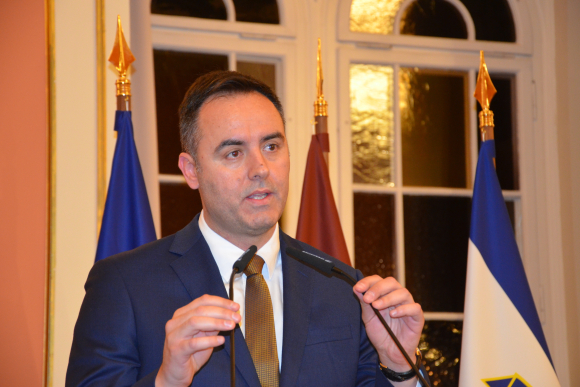
Kosovo’s new Foreign Minister, Glauk Konjufca
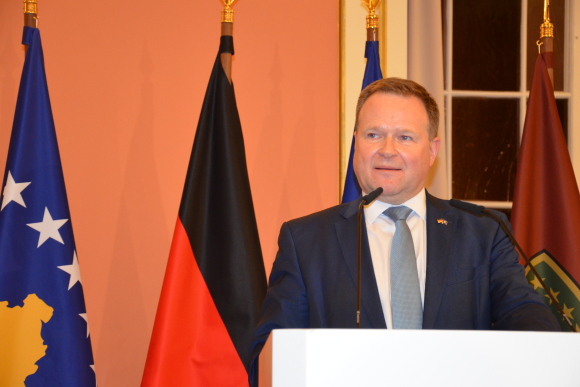
Parliamentary State Secretary Frank Schwabe
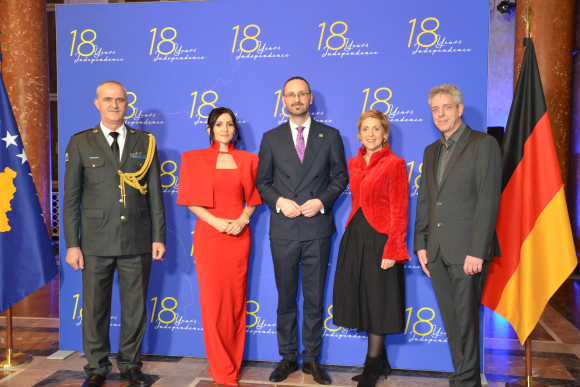
From left: Kosovo military attaché; Resmiye Kurbogaj-Ajeti, the Ambassador’s wife; H.E. Dr Faruk Ajeti, Ambassador of Kosovo; H.E. Adia Sakiqi, Ambassador of Albania, and her husband
Foreign Minister Konjufca
Konjufca underscored the close relationship between Germany and Kosovo and recalled that, in the early 1990s, Kosovo’s government-in-exile was based in Bonn. “Germany was the only country in Europe that allowed that government to operate on its territory.” Germany, he said, was also among the first states to recognise the Republic of Kosovo under international law and had consistently supported its path towards Euro-Atlantic integration.
Investment and growth
Germany, Konjufca continued, is also Kosovo’s most important trading partner and largest investor. “Since 1999, more than 750 German companies have invested in Kosovo,” he said. “Over the past two years, our economy has grown by an average of more than 5% per year. In 2024, foreign direct investment rose by around 50% compared with five years earlier, and our exports have doubled.” With a strong business climate, a central geographic location, and a young population - more than half under 30 - Kosovo offers enormous opportunities for German companies and investors.
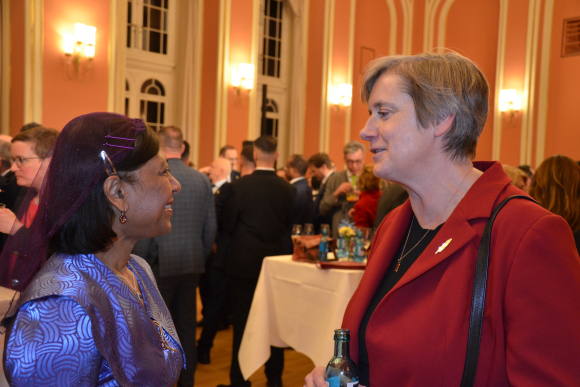
From left: H.E. Aishath Shaan Shakir, Ambassador of Sri Lanka, and H.E. Alda Vanaga, Ambassador of Latvia
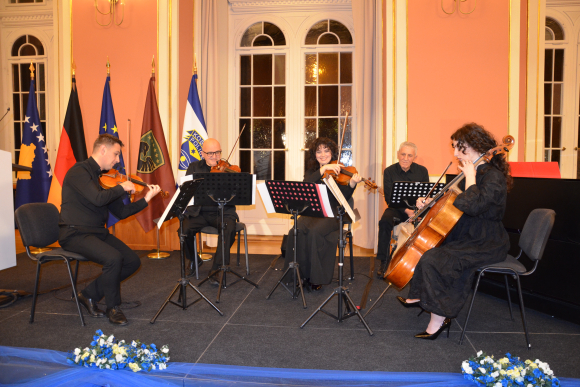
The band Neo Dardanus
Diplomatic Presence
“Our largest diplomatic presence worldwide is here in Germany, with six consulates across the country.” The Kosovan community of more than half a million people is the largest outside Kosovo, and the diaspora forms a bridge between the two countries. Konjufca condemned Russia’s war against Ukraine. Recalling the suffering his country endured in the late 1990s, he said neutrality was not an option: Kosovo stands with Ukraine.
Frank Schwabe
Konjufca then handed over to Parliamentary State Secretary Frank Schwabe, who has made an outstanding contribution to German–Kosovan relations and has advocated for Kosovo’s accession to the Council of Europe. Schwabe - who had just returned from Kosovo, where he attended the inaugural sitting of parliament - congratulated the new government, which, he said, had already set the course for accessing European and international funding.
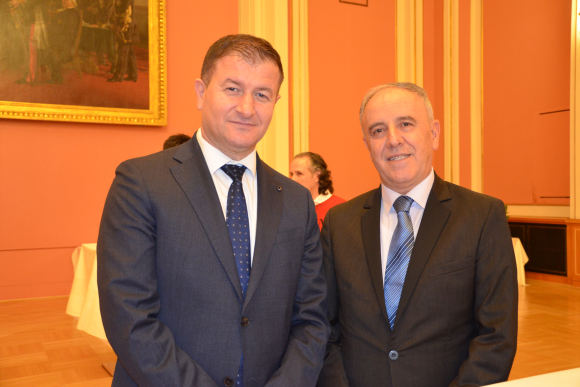
From left: H.E. Prof. Dr Ylber Sela, Ambassador of North Macedonia, and the Mayor of the North Macedonian municipality of Struga, Memdi Qyra
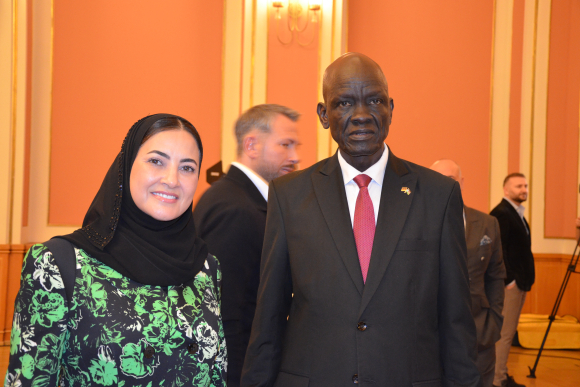
The Ambassador of Oman, H.E. Maitha Saif Al Mahrouqi, and the Ambassador of South Sudan, H.E. Gum Dominic Matiok
Minister for Culture and Tourism
Schwabe highlighted the appointment of Saranda Bogujevci as Minister for Culture and Tourism, a survivor of the Podujevë massacre of 1999. “She received the international Anne Frank Award for civil courage and is now your Minister of Culture. You can be proud of that.” Despite the horrors of the past, he said, it was necessary to talk “about the Serbian minority, about war-crimes trials, and about political dialogue with an authoritarian president in Belgrade”. Among friends, that was possible.
Member of the Council of Europe
Kosovo, Schwabe argued, must now become a member of the Council of Europe; the Parliamentary Assembly had voted 82% in favour. To states that do not recognise Kosovo, it must be clear: “There is no road back - only the road ahead: towards democracy, the rule of law, and human rights. That is what the Council of Europe stands for - for everyone in the Republic of Kosovo: Albanians, Serbs, and members of all other ethnic communities", Schwabe said. “After 18 years of independence, the task now is to mature and develop stability: towards the neighbours, towards Europe, towards the world. The Federal Republic of Germany will continue to accompany you on your path.”
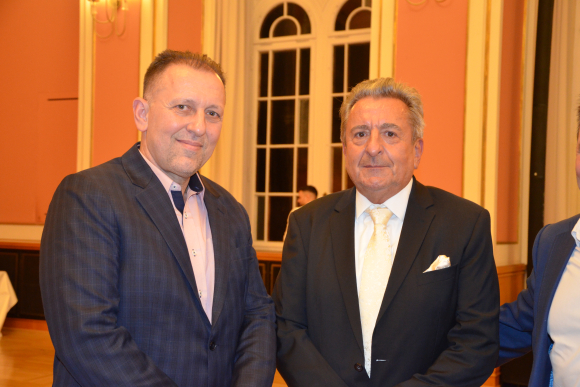
From left: Nehat Brahimi, Immobilien GmbH Magdeburg; Dr Gunnar Schellenberger (CDU), President of the Landtag of Saxony-Anhalt
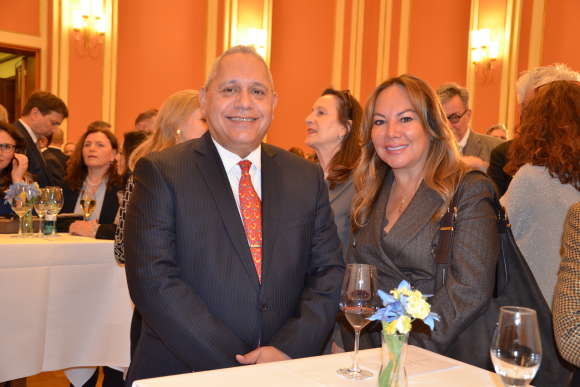
The Ambassador of Panama, H.E. Vladimir Adolfo Franco Sousa, and Claudia Ravano, the wife of the Ambassador of Monaco