
Interview
When AI Plans Your Holiday –
Tourism Trends for 2026
01.03.2026

© ITB Berlin
Deborah Rothe, Director of ITB Berlin
Nowhere are developments in tourism more readily discerned than at ITB Berlin, the world’s largest travel trade fair.
From 3 to 5 March 2026, it will once again open its doors in the German capital - and this year for the sixtieth time. Almost 6,000 exhibitors from more than 170 countries and regions are expected. More than 400 international speakers will present future-proof business models and debate the key questions facing the global tourism industry. Diplomatisches Magazin spoke with Deborah Rothe, Director of ITB Berlin, about the latest developments and trends in tourism.
From 3 to 5 March 2026, it will once again open its doors in the German capital - and this year for the sixtieth time. Almost 6,000 exhibitors from more than 170 countries and regions are expected. More than 400 international speakers will present future-proof business models and debate the key questions facing the global tourism industry. Diplomatisches Magazin spoke with Deborah Rothe, Director of ITB Berlin, about the latest developments and trends in tourism.
DM
Ms Rothe, consumers are already using artificial intelligence to support their travel planning and booking. Will AI agents take over the entire service in future?
Deborah Rothe
At the ITB Berlin Convention, there is a dedicated AI track featuring sessions on artificial intelligence - including agentic commerce, where AI systems increasingly work together in connected networks, bringing advice, decision-making and execution into a single, end-to-end workflow. AI will evolve from a mere “planning aid” into an active travel assistant: in future, AI agents could factor in preferences and context, curate offers, check availability, compare alternatives and trigger bookings - including payment as well as rebooking or cancellation. Proactive handling throughout the journey is also conceivable: in the event of delays, automatically suggesting alternatives, adjusting onward services, or consolidating communications.
DM
ITB also addresses key future issues facing the global tourism industry. What are these?
Deborah Rothe
Under the theme “Leading Tourism into Balance”, the ITB Berlin Convention brings together some of the sector’s most pressing questions. These include how to achieve growth in harmony with local acceptance, sustainability and fair value creation; how tourism can remain resilient in a crisis-prone world – the so-called “polycrisis”; and what regenerative tourism means, namely not just protecting destinations but actively strengthening them. We also explore how travel motivations and expectations are changing, for example towards experiential travel as well as longevity and wellbeing, and how responsible tourism, inclusion and long-term competitiveness can be translated into actionable strategies.
DM
What technological innovations and mega-trends can trade visitors expect?
Deborah Rothe
At ITB Berlin 2026, the key mega-trends are most evident in the travel technology segment, which is strongly represented by providers across six halls and shapes the entire customer journey. The focus is on artificial intelligence – particularly agentic commerce – new distribution and retailing models, and data-driven ecosystems that interconnect systems and processes. Payment solutions and “seamless travel” are gaining importance, enabling smooth processes from the first point of contact through to booking. At the ITB Berlin Convention, the Travel Tech Track and the AI Track set clear priorities. Networking areas such as the ITB Späti in Hall 7.2c provide space for exchange, while innovation pitches by the ITB Innovators showcase new ideas. Our guided trade visitor tours also offer very practical insights into technological developments.
Angola - Official Host Country of ITB Berlin 2026
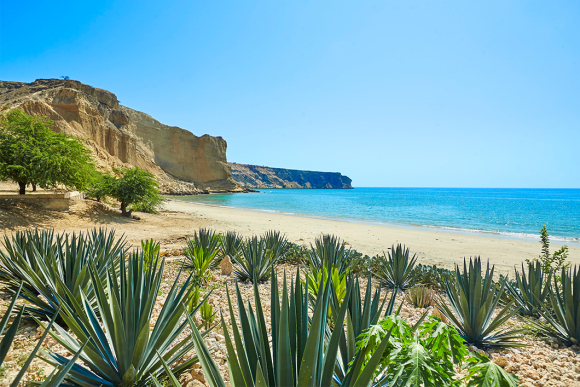
© © Angola Tourism Board / Kleber Group / Robert Haidinger
Benguela Province, Praia Azul
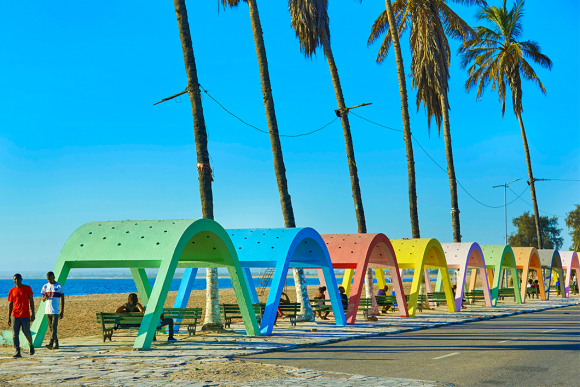
© Angola Tourism Board / Kleber Group / Robert Haidinger
Namibe Province
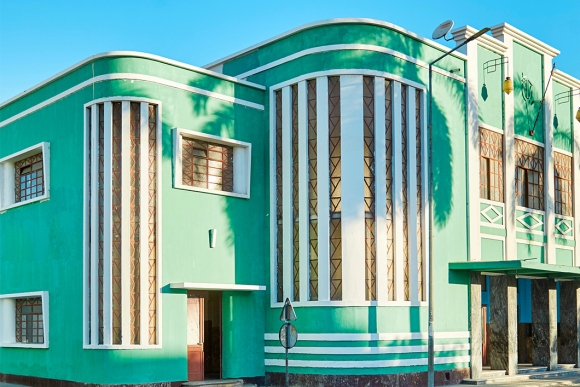
© Angola Tourism Board / Kleber Group / Robert Haidinger
Namibe, Cinema

© Angola Tourism Board / Kleber Group / Robert Haidinger
Pedras Negras
DM
What trends can be observed among airlines and cruise operators?
Deborah Rothe
Cruise operators, in particular, are strongly represented at ITB Berlin and play a major role in shaping discussions around current industry developments. In aviation, we see that more efficient, fuel-saving aircraft are making new routes economically viable. Air Canada, for example, is launching a new connection from Montréal to Berlin. Another example is Etihad, which has introduced a new service from Abu Dhabi to Düsseldorf – a route that may not previously have been commercially attractive. The same applies to a new connection to Luxembourg. In the cruise sector, expectations around transparency and credibility in sustainability are rising. Shipping companies are increasingly focusing on concrete technical and operational measures, such as new propulsion systems or alternative fuels, shore power capability and more efficient operating processes. At the same time, the dispersal of port calls is becoming more important: alternative ports, different time slots and smarter route planning are intended to relieve pressure on heavily frequented hotspots such as Venice or Dubrovnik.
DM
Which strategies are proving successful in destination management?
Deborah Rothe
Above all, these are strategies built around balance: visitor management disperses flows, eases peak periods and reduces pressure on hotspots. Crucially, local residents must be on board. Tourism only works when it is perceived as adding value. Data-driven governance – and, in time, AI-supported approaches - helps to spot patterns early and target measures more precisely.
Co-operation is becoming increasingly important: platforms such as Airbnb, a Premium Partner of ITB Berlin, promote nature-based offers and strengthen rural regions. Season management initiatives - such as Crete in partnership with Aegean Airlines - and targeted support for lesser-visited areas, like Spain’s Green North, help to steer visitor flows sustainably. In the ITB Convention session “City Destinations under Pressure”, cities, policymakers and industry representatives discuss how tourism can support vibrant city centres, good mobility and sustainable urban development.
DM Thank you for this interview, Ms Rothe
Interview Marie Wildermann
ITB Berlin
Tue 3 March – Thu 5 March 2026
Daily 10 am – 6 pm
Venue
Berlin ExpoCenter City
Messedamm 22
14055 Berlin
www.itb.com
Co-operation is becoming increasingly important: platforms such as Airbnb, a Premium Partner of ITB Berlin, promote nature-based offers and strengthen rural regions. Season management initiatives - such as Crete in partnership with Aegean Airlines - and targeted support for lesser-visited areas, like Spain’s Green North, help to steer visitor flows sustainably. In the ITB Convention session “City Destinations under Pressure”, cities, policymakers and industry representatives discuss how tourism can support vibrant city centres, good mobility and sustainable urban development.
DM Thank you for this interview, Ms Rothe
Interview Marie Wildermann
ITB Berlin
Tue 3 March – Thu 5 March 2026
Daily 10 am – 6 pm
Venue
Berlin ExpoCenter City
Messedamm 22
14055 Berlin
www.itb.com
