
A Tribute to Lennart Meri -
Estonia’s National Day
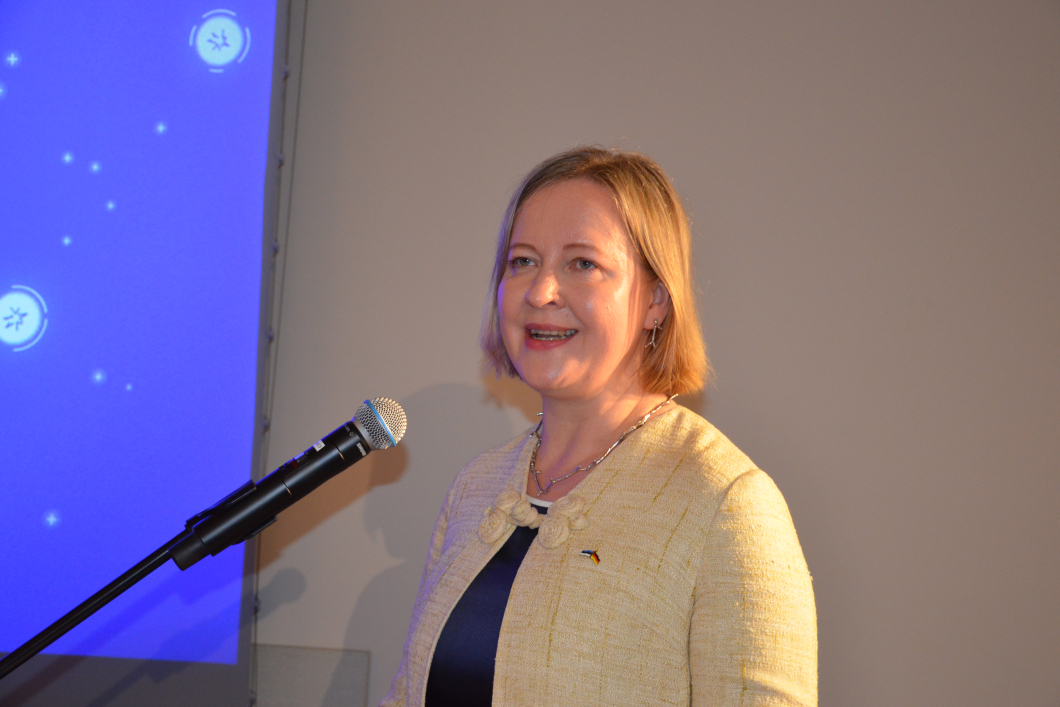
H.E. Marika Linntam, Ambassador of Estonia, during her speech
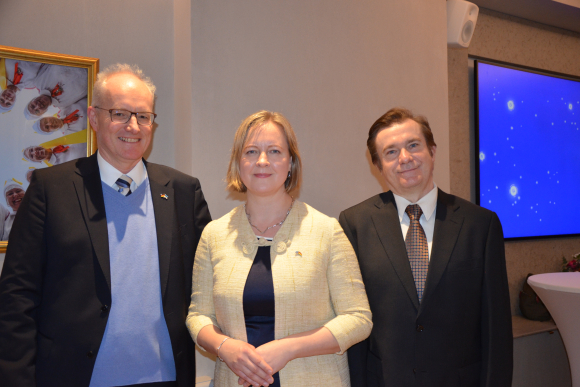
From left: Thomas v. Lüpke, Chairman of the German-Baltic Future Foundation; Ambassador Linntam and her husband
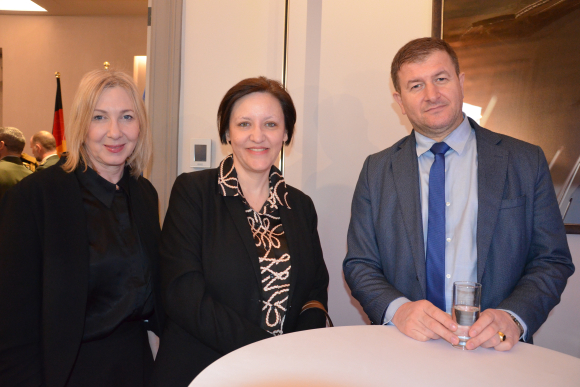
From left: Saša Šavel Burkart, Head of the Slovenian Cultural Centre Berlin; H.E. Dr Ana Polak Petrič, Ambassador of Slovenia; H.E. Prof. Dr Ylber Sela, Ambassador of North Macedonia
Ambassador H.E. Marika Linntam opened her speech by recalling Meri. Lennart Meri – who later became a writer, filmmaker, and politician and played an important role during Estonia’s restoration of independence – became Estonia’s President in 1992.
The strengths of the Estonians
Ambassador Linntam quoted from Lennart Meri’s National Day address in the mid-1990s, in which he highlighted the “strengths of the Estonians”: commonsense, the ability to learn, and the will to act - along with resilience shaped by the experience of Soviet occupation. This mindset, she said, had anchored Estonia in the values of justice, the rule of law, and freedom. What matters is not the “rule of might,” but the “might of right.”
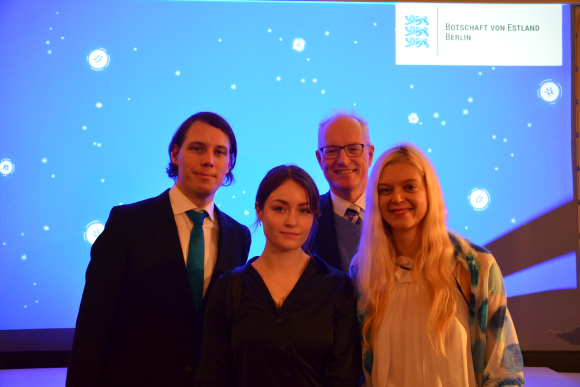
Members of the German-Baltic Future Foundation
From left: Benjamin Stark, Antonia Stüwe, Thomas v. Lüpke, Heilika Leinus
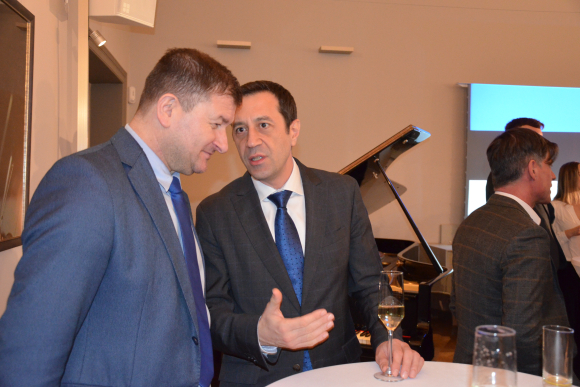
From left: H.E. Prof. Dr Ylber Sela, Ambassador of North Macedonia, and H.E. Grigor Porozhanov, Ambassador of Bulgaria
Estonia’s National Day on 24 February has also, for the past four years, marked the anniversary of Russia’s attack on Ukraine. Estonia and Germany stand firmly with Ukraine, with the aim of achieving a just and lasting peace “through strength,” including further assistance and tougher sanctions against Russia.
German–Estonian cooperation
The speech highlighted the close German–Estonian cooperation within the EU and NATO, Germany’s importance for deterrence and defence – among other things through its presence in the region – as well as shared future-oriented priorities such as digitalisation, innovation, and the defence industry. In closing, Ambassador Linntam thanked all supporters, the honorary consuls, and the Embassy team, and then handed over to Minister of State Krichbaum.
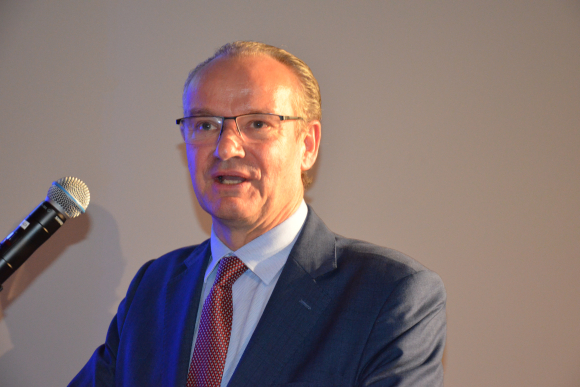
Gunther Krichbaum, Minister of State for Europe at the Federal Foreign Office
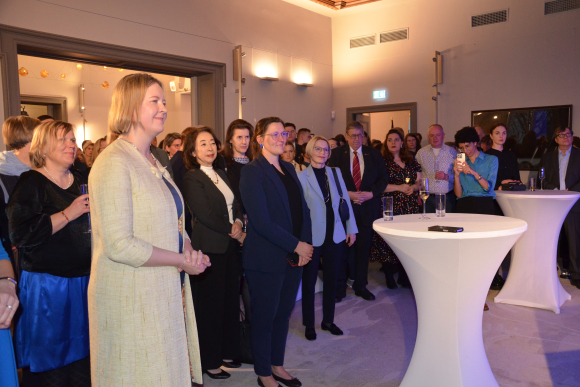
During Gunther Krichbaum’s speech
From left: the Ambassadors of Estonia, Japan and Luxembourg; the Minister of State’s Deputy Head of Office, Anne Kathrin Kirsch; the Ambassador of Switzerland
Minister of State Gunther Krichbaum
Krichbaum underscored the decades-long, trusting German–Estonian partnership, rooted in shared European values. He praised Estonia’s lead in digitalisation and held it up as a model for Germany.
Support for Ukraine
He also described the grave security situation, stressing that supporting Ukraine means protecting Europe. He called for greater economic pressure on Russia and swift assistance for Ukraine. Germany reaffirmed its commitment to the region’s security, including through a brigade in Lithuania to strengthen NATO’s eastern flank, and urged higher defence spending. In closing, he paid tribute to Estonia’s “Singing Revolution,” praised the country’s natural beauty, and reaffirmed his commitment to German–Estonian friendship - and to Estonia, Europe, and Ukraine.
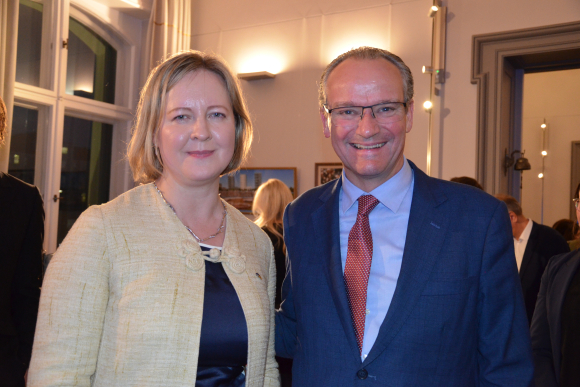
The Ambassador of Estonia with Minister of State Gunther Krichbaum
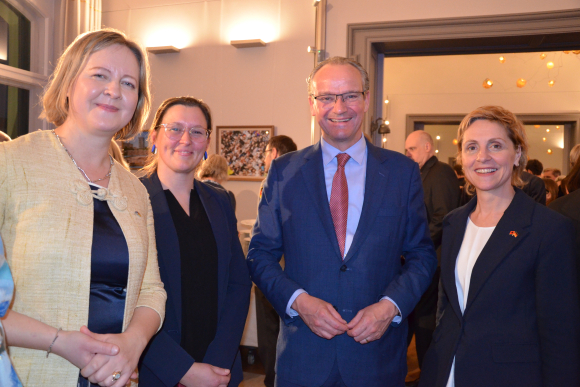
From left: Estonia’s Ambassador H.E. Marika Linntam; Anne Kathrin Kirsch; Minister of State Gunther Krichbaum; H.E. Adia Sakiqi, Ambassador of Albania
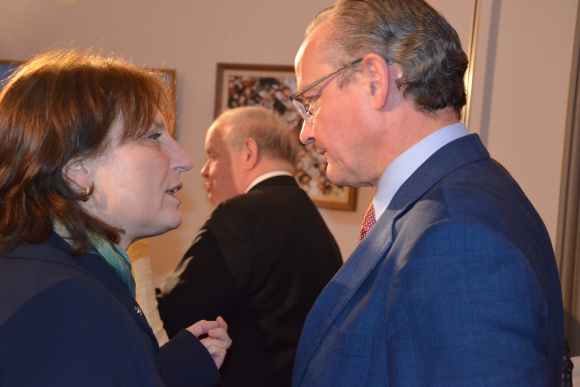
H.E. Adriana-Loreta Stănescu, Ambassador of Romania, in conversation with Minister of State Krichbaum
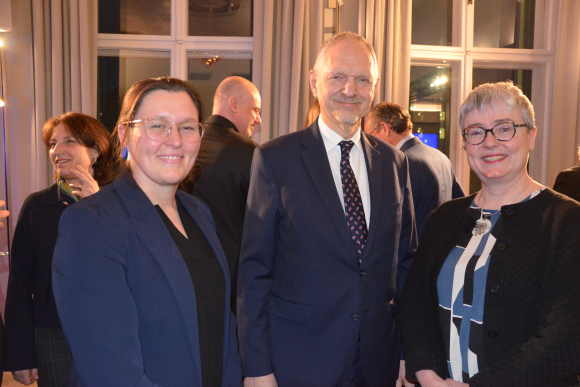
From left: H.E. Adriana-Loreta Stănescu, Ambassador of Romania (in the background); Anne Kathrin Kirsch, Deputy Head of Office to the Minister of State; H.E. Giedrius Puodziunas, Ambassador of Lithuania; H.E. Maeve Monica Collins, Ambassador of Ireland