
“A Success Story of European Integration” – Croatia’s National Day
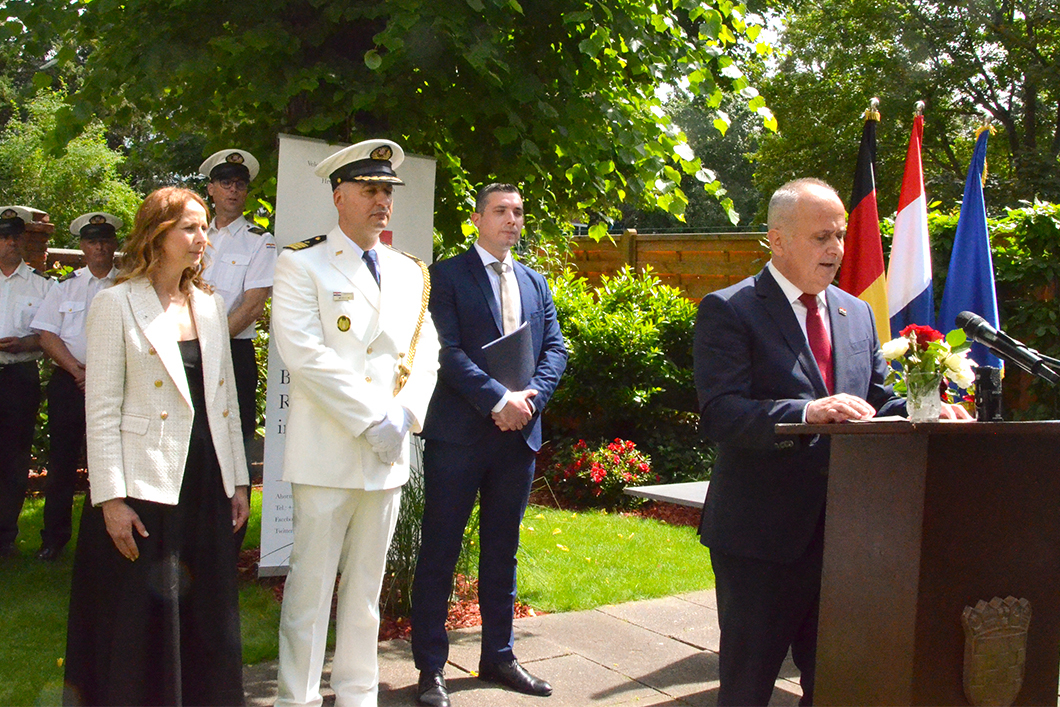
The Ambassador of Croatia delivering his speech in the garden of the Croatian Embassy
In his address, H.E. Gordan Bakota, Ambassador of Croatia, highlighted his country’s development into a firmly established member of the European Union, NATO, the Schengen Area and the eurozone, as well as its role as a reliable partner in addressing current political and geopolitical challenges. He emphasised the strong Croatian-German relationship, founded on shared values such as democracy, the rule of law and freedom, and referred to recent high-level political visits and the signing of a strategic action plan aimed at deepening bilateral cooperation. He also underlined Croatia’s important role in EU enlargement policy, its contribution to the stability of South-Eastern Europe, and its commitment to the joint support of Ukraine.
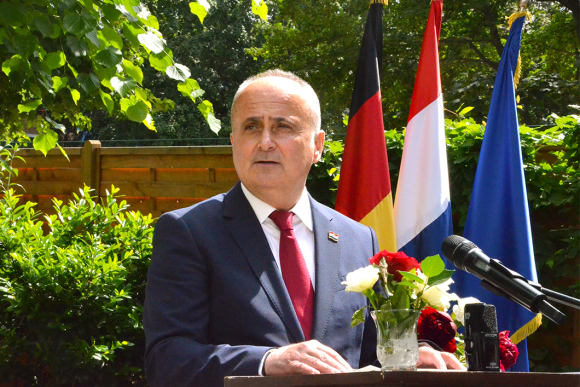
H.E. Gordan Bakota, Ambassador of Croatia
European Initiatives
The Ambassador described Croatia as an active contributor to European initiatives, particularly in the development of transport, energy and digital infrastructure linking the Baltic, Adriatic and Black Sea regions. He highlighted the LNG terminal on the island of Krk, the JANAF pipeline system, and Croatia’s growing role as a regional energy and transport hub.
A Partner in Defence
In the field of defence, the Ambassador emphasised the modernisation of Croatia’s armed forces, the reintroduction of two months of compulsory basic military training, and the close defence cooperation with Germany. He referred, among other examples, to collaboration with Rheinmetall and to the deployment of Croatian troops as part of the NATO Battlegroup in Lithuania.

Anja Wallau, representing the German Federal Government, Federal Foreign Office
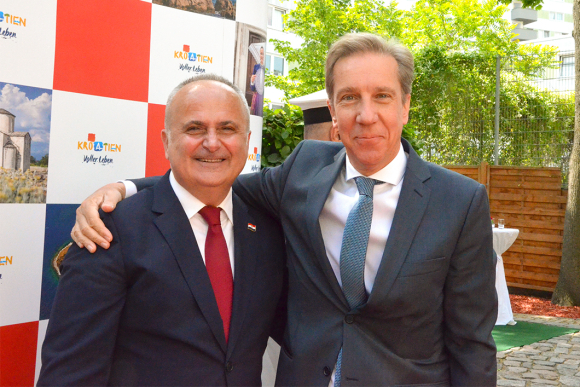
From left to right: H.E. Gordan Bakota, Ambassador of Croatia, and H.E. Alexandros Papaioannou, Ambassador of Greece
Economic Momentum
Ambassador Bakota highlighted Croatia’s impressive economic development, describing Germany as the country’s most important trading partner and a key investor. He also pointed to the growing importance of tourism, reflected in the recent opening of an office of the Croatian National Tourist Board in Berlin. The figures speak for themselves: around three million Germans visited Croatia last year.
Unity, Trust and Team Spirit
Concluding his remarks with a reference to the 2026 FIFA World Cup, Ambassador Bakota stated: “Great achievements are built on unity, trust and team spirit. This applies in sport just as much as it does in every other area of our lives.”
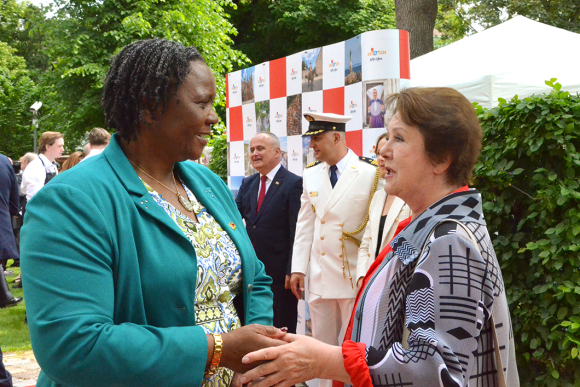
From left to right: H.E. Alice Mashingaidze, Ambassador of Zimbabwe, and Dr Irene Ernst, CEO of Diplomatisches Magazin
Latin America Meets Monaco
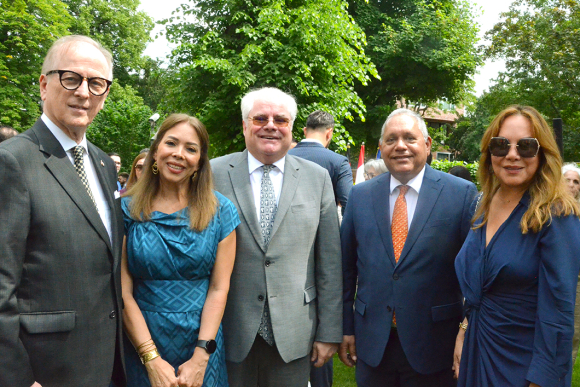
From left to right: H.E. Augusto Arzubiaga Scheuch, Ambassador of Peru; H.E. Florencia Vilanova de von Oehsen, Ambassador of El Salvador; H.E. Lorenzo Ravano, Ambassador of Monaco; H.E. Vladimir Sousa, Ambassador of Panama; and Mrs Claudia Ravano, spouse of the Ambassador of Monaco
“A Success Story of European Integration”
Speaking on behalf of the German Federal Government, Anja Wallau of the Federal Foreign Office congratulated Croatia on its National Day and praised the country’s remarkable development since gaining independence 35 years ago into a successful member of the European Union, NATO, the Schengen Area and the eurozone. “This path demonstrates the enduring strength of the idea of a free and united Europe.”
She noted that Germany and Croatia are further deepening their cooperation through a new bilateral action plan, particularly in the fields of economic affairs, energy, research, security and defence policy. Both countries continue to support Ukraine and advocate EU enlargement. “Croatia is a success story of European integration,” Wallau stated, adding that the close political, economic and societal ties between the two countries should continue to grow.
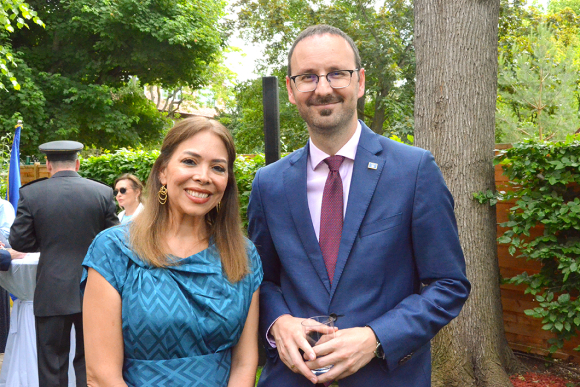
H.E. Florencia Vilanova de von Oehsen, Ambassador of El Salvador, and H.E. Dr Faruk Ajeti, Ambassador of Kosovo
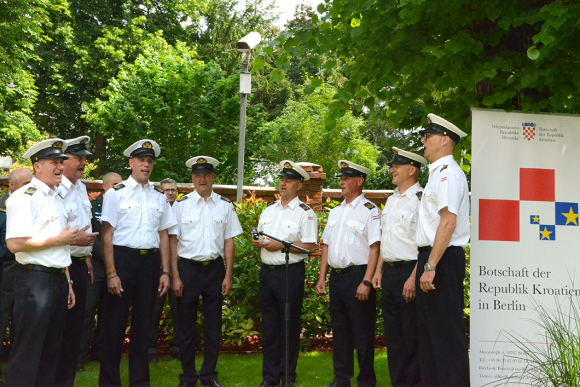
Members of the A Cappella Choir
Klapa
The official part of the reception concluded with performances by a Croatian a cappella ensemble. Klapa, a traditional form of multipart singing originating from the Dalmatian coastal region, is a musical symbol of both the Croatian Armed Forces and Croatia’s cultural diplomacy. It forms part of Croatia’s intangible cultural heritage and is inscribed on UNESCO’s Representative List of the Intangible Cultural Heritage of Humanity. The songs express patriotism and a deep connection to Croatian tradition. The performances provided a fitting transition to the informal part of the reception: a summer garden gathering in a relaxed atmosphere of Croatian hospitality.
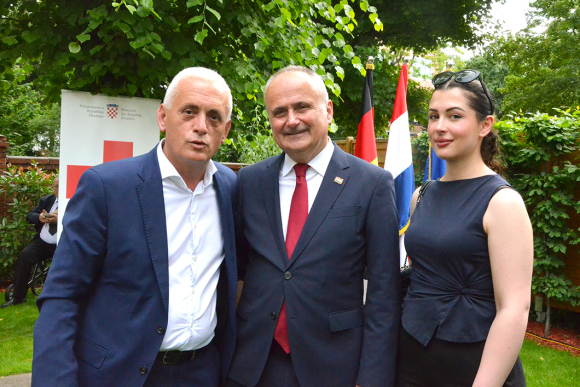
From left to right: Beqë Cufaj, former Ambassador of Kosovo; H.E. Gordan Bakota, Ambassador of Croatia; and Alea Cufaj, Manager at liqid.de and daughter of former Ambassador Cufaj
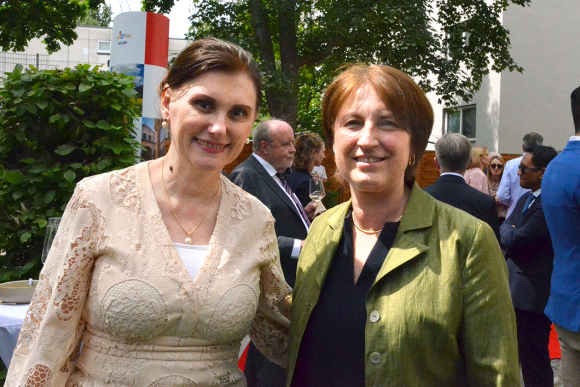
From left to right: H.E. Dr Snežana Janković, Ambassador of Serbia, and H.E. Adriana-Loreta Stănescu, Ambassador of Romania
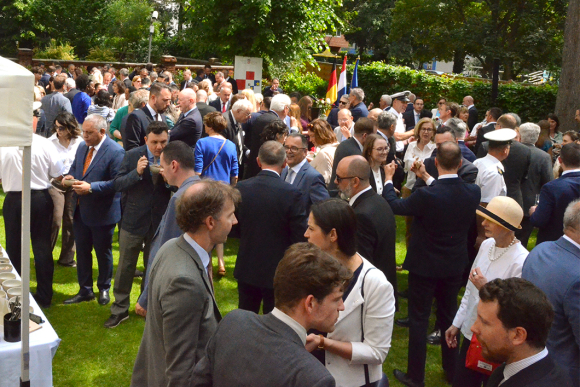
The Embassy reception marking Croatia’s National Day: a relaxed summer celebration in an atmosphere of Croatian hospitality