Events & Impressions
Kosovo’s Coming of Age
26 February 2026
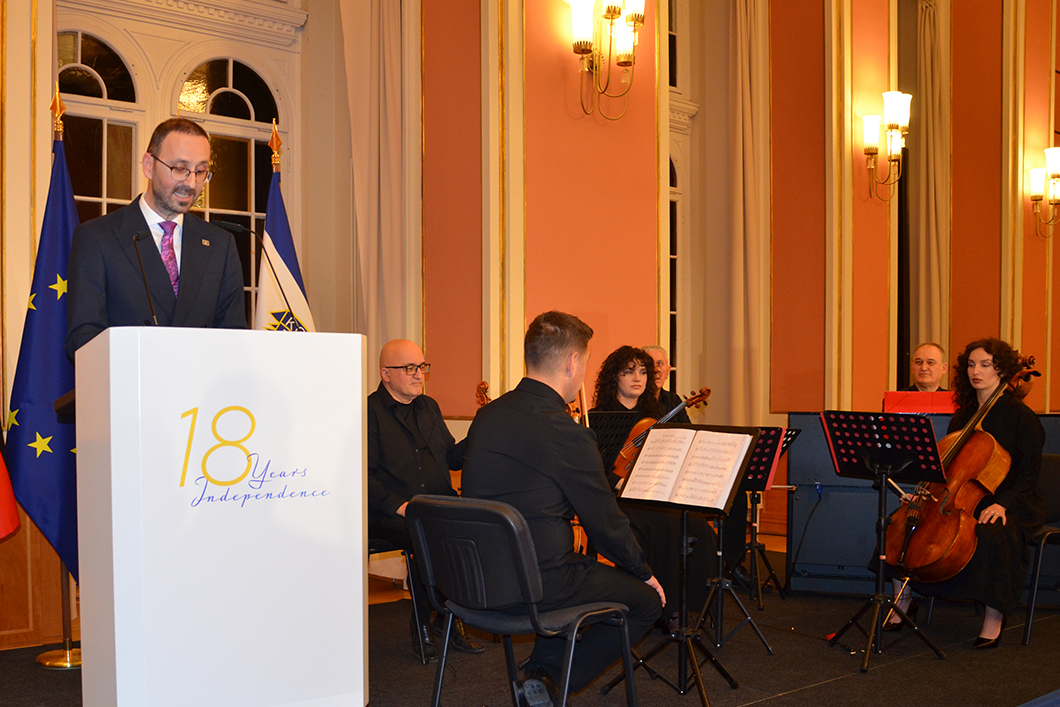
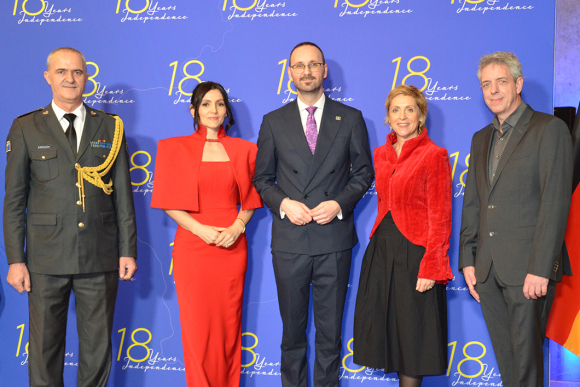
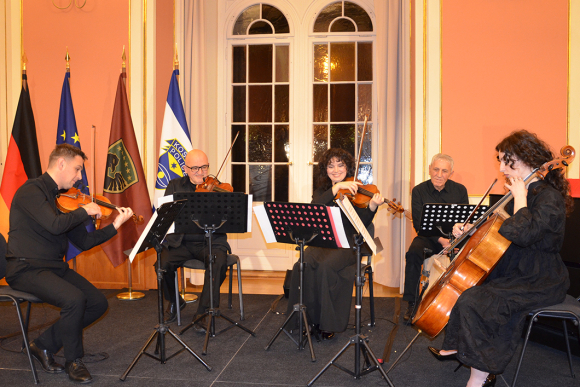
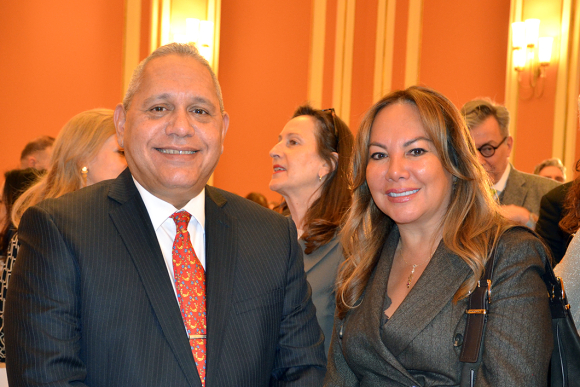
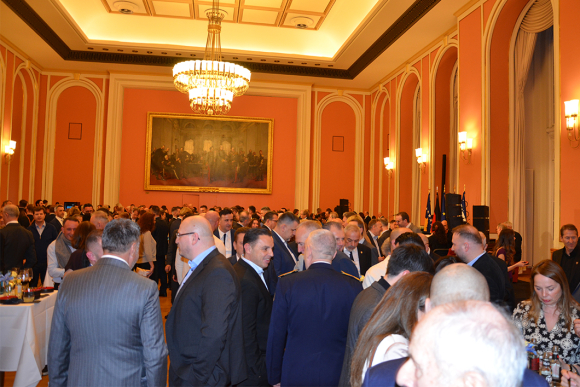
On 23 February 2026, the Embassy of Kosovo celebrated the small Balkan state’s 18 years of independence at the Rotes Rathaus in Berlin. “The development of the Republic of Kosovo to date is not only a success for our country, but a shared achievement,” said Ambassador H.E. Dr Faruk Ajeti in his address.
Germany: A Pioneer
“We are deeply grateful to Germany for its pioneering role in Kosovo policy as a driving force.” Eighteen years ago, the small Balkan country founded its own state. “Kosovo has come of age, but being an adult means, above all, one thing: taking responsibility. Responsibility for our democracy, for our country, for territorial integrity and for our place in Europe … Our direction is clear: the Euro-Atlantic perspective.”
Artists and Athletes
Ajeti recalled outstanding artists and athletes of Kosovar origin: the British-raised singers Dua Lipa and Rita Ora, as well as Era Istrefi, a symbol of modern Kosovar pop culture, and the celebrated athletes Majlinda Kelmendi and Distria Krasniqi. German-Kosovar author Jehona Kicaj made the leap into the German literary canon with her debut novel, and award-winning director Blerta Zeqiri is a key figure in modern European cinema. A mayor of a German municipality has Kosovar roots, and in football, “our players are writing history in the Bundesliga.” After thanking the musicians, sponsors and the embassy team, the Ambassador handed over to Glauk Konjufca, Kosovo’s new Foreign Minister.
Foreign Minister Konjufca
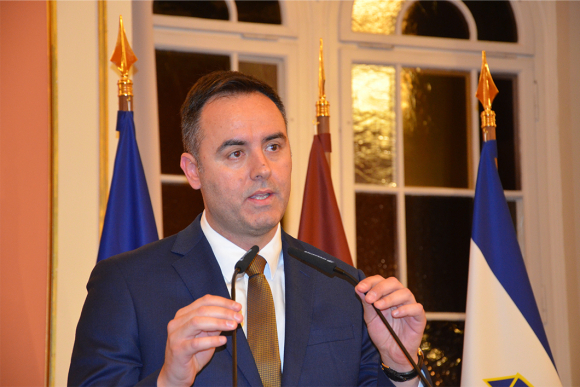
Konjufca underlined the close relations between Germany and Kosovo, recalling that in the early 1990s, the Kosovar government-in-exile was based in Bonn. “Germany was the only country in Europe that allowed this government to operate on its territory.” Germany, he said, had been among the first states to recognise the Republic of Kosovo under international law and had consistently supported its path towards Euro-Atlantic integration.
Investment and Growth
Germany, he said, is also Kosovo’s most important trading partner and largest investor. “Since 1999, more than 750 German companies have invested in Kosovo,” said Konjufca. “Over the past two years, our economy has grown by an average of more than 5% annually. Foreign direct investment rose by around 50% in 2024 compared with five years earlier, and our exports have doubled.” With a favourable business climate, its central geographic location and a young population — more than half of whom are under 30 — Kosovo offers enormous opportunities for German companies and investors.
Diplomatic Presence
“Our largest diplomatic presence worldwide is here in Germany, with six consulates across the country.” The Kosovar community, numbering more than half a million people, is the largest outside Kosovo, and the diaspora forms a bridge between the two countries. Konjufca condemned Russia’s war against Ukraine. He recalled the suffering his country experienced in the late 1990s, saying that neutrality was therefore not an option — Kosovo stands by Ukraine’s side.
State Secretary Frank Schwabe
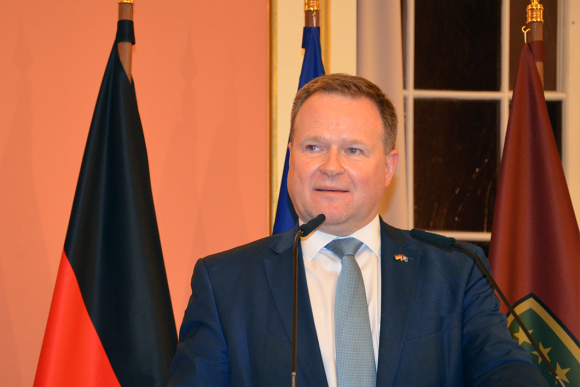
With that, Konjufca handed over to State Secretary Frank Schwabe, who has made an outstanding contribution to German-Kosovar relations and has championed Kosovo’s accession to the Council of Europe. Frank Schwabe, who had just returned from Kosovo, where he had attended the constituting session of parliament, congratulated the new government, which had already laid the groundwork to be able to draw on European and international funding.
Minister for Culture and Tourism
Frank Schwabe highlighted the appointment of Saranda Bogujevci as Minister for Culture and Tourism, a survivor of the 1999 Podujevë massacre. “She received the International Anne Frank Award for Civil Courage and is now your Minister of Culture. You can be proud of that.” Despite the horrors of the past, he said, one must speak “about the Serbian minority, about war crimes trials, about political dialogue with an authoritarian president in Belgrade.” Among friends, that is possible.
Member of the Council of Europe
Kosovo must now become a member of the Council of Europe, he said; the Parliamentary Assembly had voted 82% in favour. The states that do not recognise Kosovo must understand: “There is no way back, only a way forward: towards democracy, the rule of law and human rights. That is what the Council of Europe stands for — for everyone in the Republic of Kosovo: Albanians, Serbs and members of all other ethnic groups,” said Schwabe. “After 18 years of independence, the task now is to mature, to build stability, towards its neighbours, towards Europe, towards the world. The Federal Republic of Germany will continue to accompany you on your path.”