Events & Impressions
Grundlovsdag – Summer Festival Marking Denmark’s Constitution Day
13 June 2026
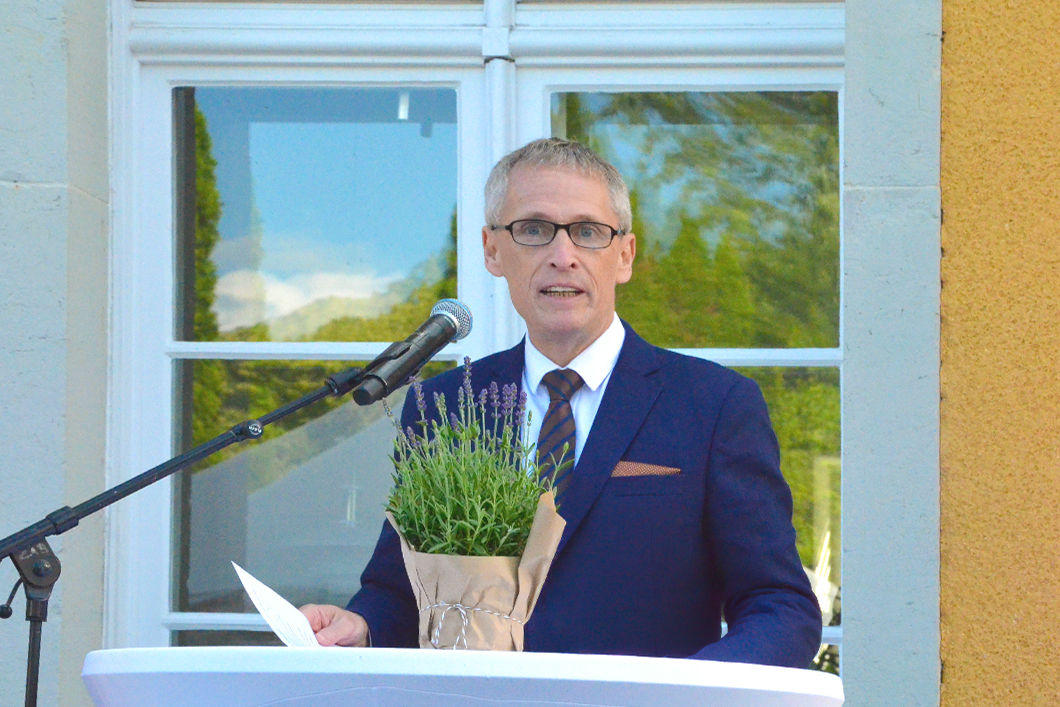
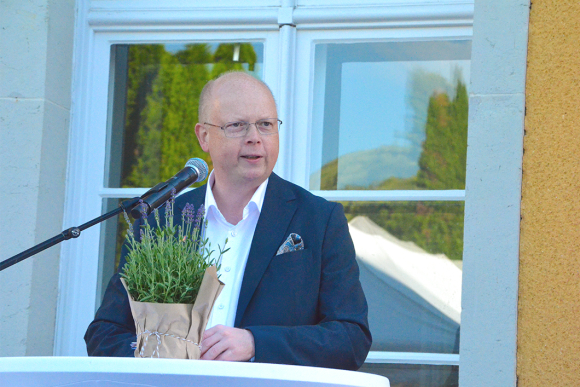
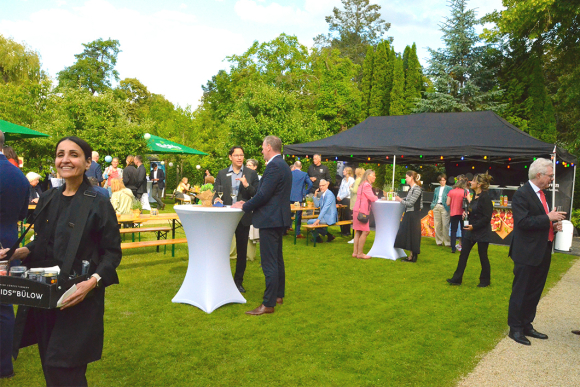
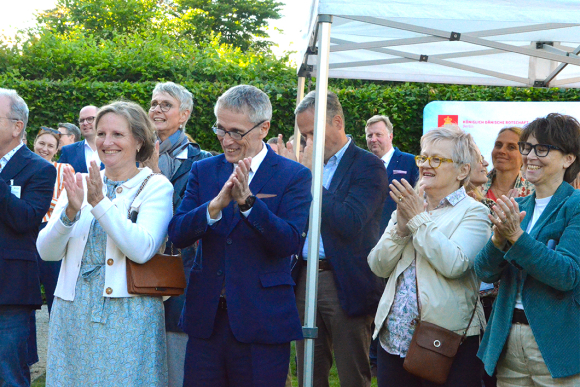
To mark Denmark’s Constitution Day (Grundlovsdag), the Danish Ambassador, H.E. Thomas Østrup Møller, invited guests to a festival in the garden of his residence in Berlin-Dahlem on 11 June. In his address, he placed the significance of democracy, minority protection and German-Danish cooperation at the centre of his remarks.
Minorities – Vital to a Living Democracy
The Ambassador paid tribute to Stefan Seidler, who since 2021 has represented the South Schleswig Voters’ Association in the German Bundestag, advocating for the Danish and Frisian minorities. He emphasised how important the political representation of minorities is for a living democracy.
Denmark Among the Top Ranks
Yet worldwide, and in Europe too, democracy is under pressure. Democracy means “not only free and fair elections, but also the rule of law, freedom of expression and of the press, freedom from corruption, and the protection of minorities.” That Denmark’s democracy functions well can be seen, among other things, in the fact that the country once again ranks first on Transparency International’s Corruption Perceptions Index, fourth on the Reporters Without Borders Press Freedom Index, and likewise near the top of the list of the world’s happiest countries.
Challenges Facing Democracies
As central challenges, Ambassador Østrup Møller cited the worldwide advance of autocratic tendencies as well as the influence of social media and large tech companies, which are capable of manipulating public debate.
The Denmark–Germany Partnership
A further focus of the address was the close partnership between Denmark and Germany. The two countries are increasingly cooperating in the fields of security, digitalisation, health and renewable energy. Projects such as the Fehmarnbelt link symbolise this growing together. Particularly in the border region, a conflict-ridden past has given way to a trusting friendship – sustained also by the German and Danish minorities on both sides of the border.
Danish Pragmatism
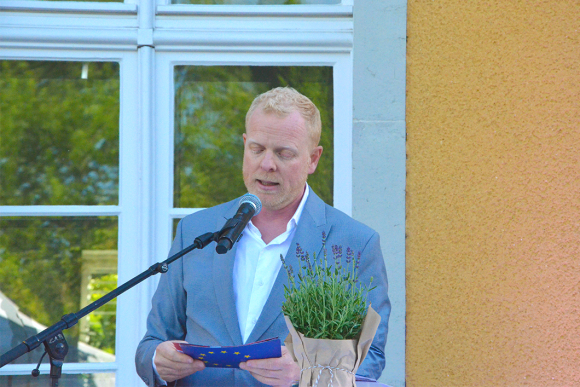
In his address, Stefan Seidler of the South Schleswig Voters’ Association presented the German-Danish border region as a model for reconciliation, lived diversity and minority protection. Out of a past shaped by conflict, a space had emerged in which minorities live together democratically. What matters, he said, is how democracies treat their minorities. He also highlighted the close cooperation between Germany and Denmark in infrastructure, energy, security and environmental protection, praising Danish pragmatism as an example to follow. His core point: it is not borders or projects that connect the two countries, but people.
Denmark’s Eurovision Song Contest Star
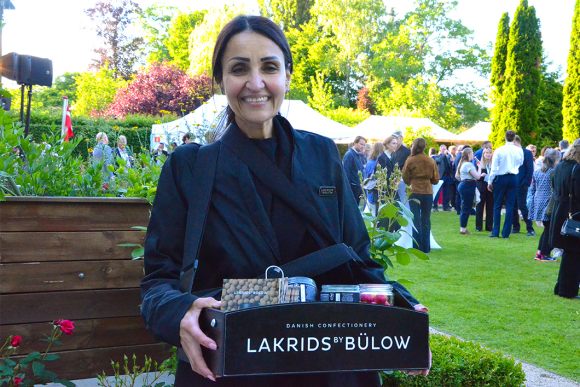
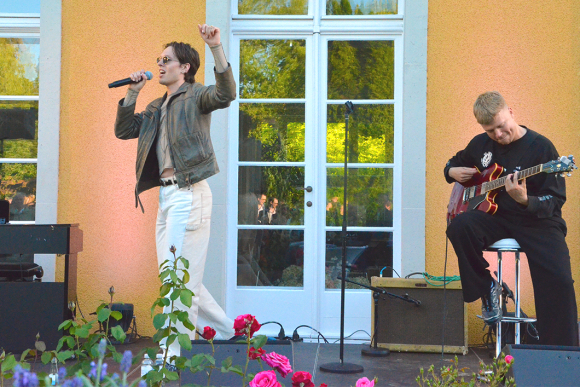
Matthias Sonne, Head of the Communications and Culture Department, entertainingly hosted the evening, bantered playfully with the audience, and, with characteristic Danish ease, got everyone singing national anthems and Beatles songs. The musical highlight was the performance by Denmark’s Eurovision Song Contest star, Søren Torpegaard Lund. Afterwards, guests enjoyed burgers, hot dogs, Carlsberg beer and other Danish delicacies at the summer festival in the expansive embassy garden, with live music from Frederik Verdersø and Emilia Mårtensson.
Impressions from the Event