Events & Impressions
Colombia’s National Day as a Grand Popular Festival
17 July 2026
© Diplomatisches Magazin
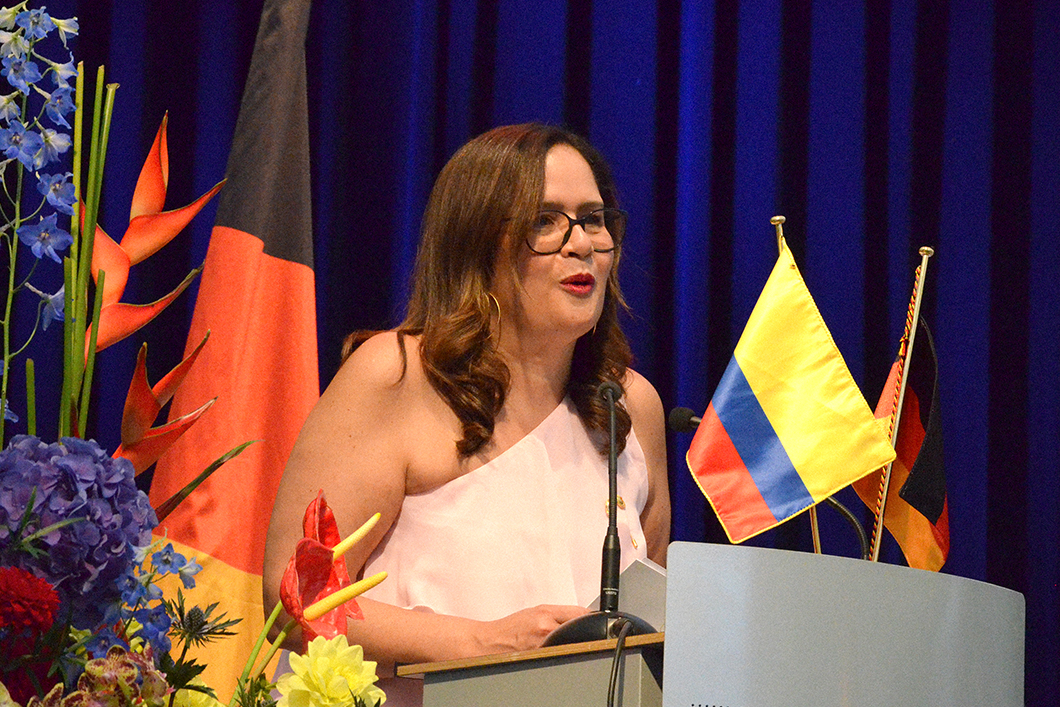
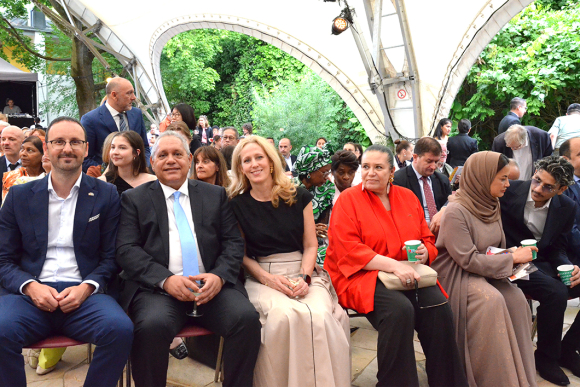
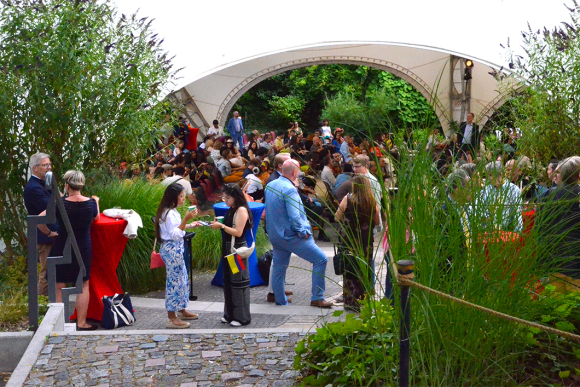
On 15 July, the Colombian Embassy in Berlin celebrated the National Day of the Republic of Colombia at a venue rather unusual for embassy receptions: the grounds of the UFA Fabrik, known for its alternative culture scene. The Colombian Ambassador, H.E. Yadir Salazar-Mejía, marked the 216th anniversary of independence as an occasion to reflect on Colombia’s identity and its role in the world, and as recognition of her country’s historical continuity, which has seen uninterrupted, peaceful and democratic transfers of power.
Strengthening the Diaspora
The Ambassador described Germany as a strategic partner. The roughly 40,000 Colombians living in Germany, she said, were their country’s best ambassadors and were placed at the centre of a National Day deliberately designed as a popular festival. The Embassy is pursuing a new, participatory foreign policy and strengthening the diaspora through networks in science, business, culture and law.
At the same time, the Ambassador emphasised the dynamic development of bilateral relations: Germany is Colombia’s most important trading partner within the EU, and cooperation ranges from the energy transition, climate protection and research to security and vocational training. As a non-permanent member of the UN Security Council, Colombia is taking on international responsibility and championing multilateralism.
The Fight Against Organised Crime and Drug Trafficking
In the fight against organised crime and drug trafficking, she argued for expanding legal economic prospects and trade. As an OECD member, a NATO global partner and Latin America’s third-largest economy, Colombia wants to further deepen its partnership with Germany, including through a planned social security agreement.
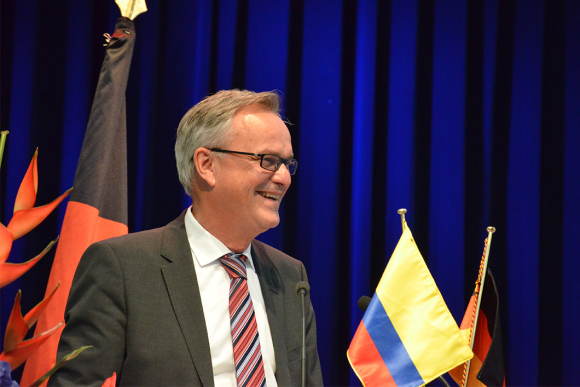
In his response, Hans-Georg Engelke, representing the Federal Ministry of the Interior, wryly referred to having been tasked with speaking “of all things about the drugs issue”, even though there were many other interesting topics relating to Colombia. In the field of internal security in particular, a close partnership had developed, since the growing importation of cocaine into Germany and the spread of organised crime also posed a threat to Germany’s internal security.
Building Legal Economic Structures
The root causes could only be tackled jointly, not least because demand for drugs originates in Western countries. Colombia and Germany today work closely together, including through police liaison officers, customs, and joint security measures. He said he agreed with the Ambassador that the goal must be to strengthen legal economic structures and give smallholder farmers secure markets, making them independent of criminal networks.
Cooperation on migration, trade and security would also be further expanded. For Germany, Colombia is a reliable democratic partner, a NATO global partner, and a committed advocate of multilateralism.
© Diplomatisches Magazin

© Henrik Andree / Embassy of the Republic of Colombia in Germany
© Diplomatisches Magazin
© Diplomatisches Magazin

© Diplomatisches Magazin

© Diplomatisches Magazin
© Diplomatisches Magazin
© Diplomatisches Magazin
© Diplomatisches Magazin
© Diplomatisches Magazin