Words as weaponsThe silent war against democracy
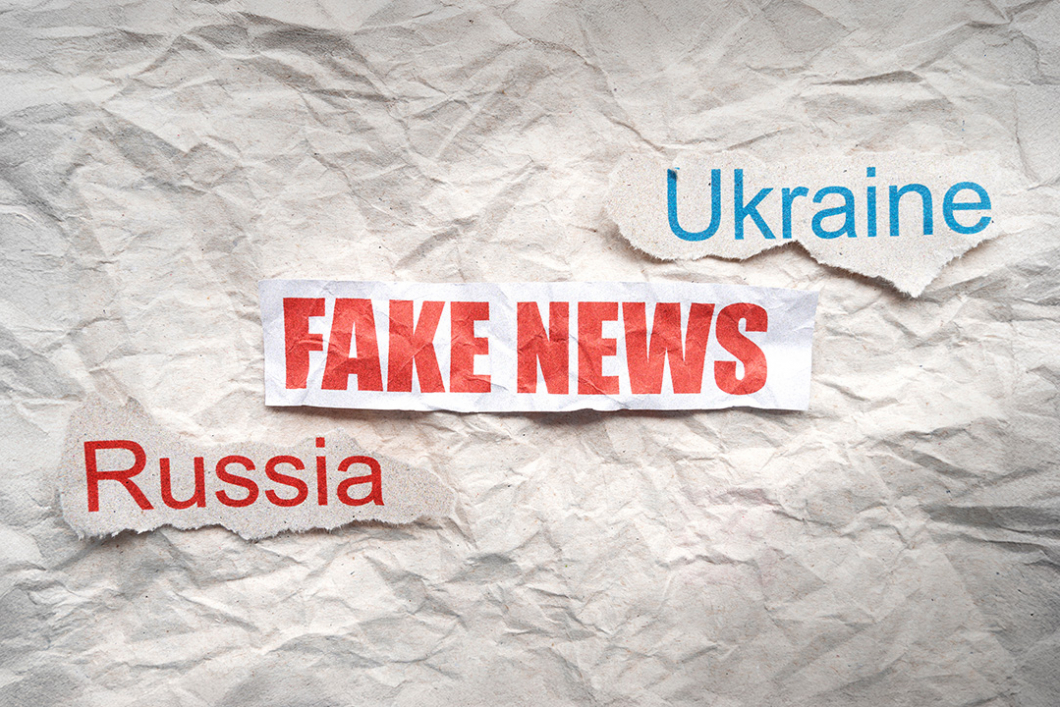
Can a tweet destabilise a democracy? Can deepfakes influence elections? Can authoritarian states achieve more through targeted disinformation than through tanks and sanctions?
The answer to all these questions is yes. In an era of hybrid threats, disinformation is a central element of strategic influence, not a minor issue.
Democracies are particularly vulnerable precisely because they are open, pluralistic, and organised according to the rule of law. However, international law and security policy are struggling to address this new threat. But how can you tell what is wrong when it feels real? Disinformation is not a fixed format, but a strategy. It can take the form of images, voices or text, and can be either shrill or subtle. It disguises itself as opinion, news or jokes. This adaptability is precisely what makes it so dangerous: it adapts to our media, our emotions and our insecurities.
US election campaign and Ukraine
This is particularly evident in two recent cases that are now considered blueprints for modern disinformation strategies. During the 2016 US election campaign, for example, Russian actors deliberately attempted to undermine trust in democratic institutions. Fake accounts, orchestrated campaigns and emotional content were used to attack candidate Hillary Clinton in particular, including the spread of absurd conspiracy theories such as ‘Pizzagate’. Millions of people saw and shared this content long before it was exposed as fake. A few years later, this pattern is repeating itself in the war against Ukraine, but on a larger scale.
The information space as a battlefield
Even before the Russian invasion of 2022, a flood of propaganda narratives had paved the way, ranging from claims that the Ukrainian government was ‘fascist’ to staged attacks. Since then, the information space itself has become a battlefield, with manipulated videos, deepfakes, and targeted campaigns designed to influence not only opinions, but also perceptions of reality. However, such disinformation campaigns are a daily occurrence and are often so subtle that the manipulated content is not immediately recognisable. But who benefits from this deliberate uncertainty?
The profiteers
First and foremost, those who have no interest in stable, pluralistic democracies benefit: authoritarian states such as Russia and China, as well as right-wing populist and anti-democratic forces within Western societies. The logic is similar in both cases: the less trust people have in the media, institutions or democratic decision-making processes, the more susceptible they become to simple truths, polarisation and radical narratives. Autocracies use disinformation to pursue geopolitical goals, such as expanding their spheres of influence, manipulating public opinion in other states, and undermining trust in international alliances like the EU and NATO. For these states, their opponents’ weaknesses are often more effective than their own strengths.
Disinformation and power
In this sense, disinformation is not merely a communication technique; it is also a strategic means of exercising power in the modern world. At the same time, actors within societies, especially populist movements, use the same tools. They profit from outrage, mistrust, and emotional communication that aims to divide rather than encourage dialogue. The distinction between disinformation originating from abroad and targeted manipulation from within is becoming increasingly blurred. What starts as a troll campaign in Saint Petersburg often ends up on the Telegram channels of Western politicians. This dynamic presents democracies with a dual challenge: they must defend themselves against external attempts to influence them and defend their democratic structures against internal erosion.
Real or fake?
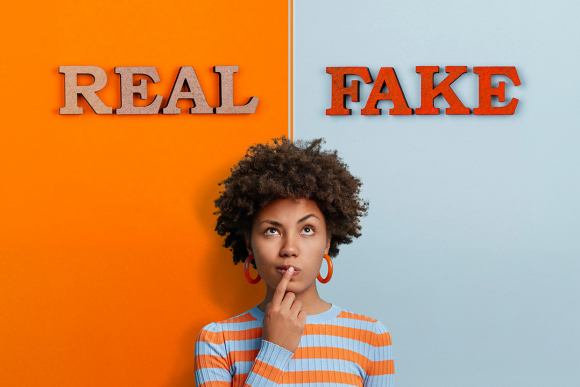
After all, the greatest success of a disinformation campaign is not to deceive people in the short term, but to make them doubt the truth in the long term. But how can you tell if information is real? In a digitalised, highly dynamic media environment, this is often more difficult than it seems. Much disinformation appears plausible at first glance — precisely because it is emotionally engaging, visually convincing, or embedded in familiar narratives. This makes it all the more important to look closely. Who is the source? Is there further independent confirmation? Does what is being said correspond to known facts, or is it primarily designed to provoke outrage? So-called ‘open source intelligence’ (OSINT) methods, employed by investigative journalists and fact-checkers, can be useful here. Geolocation, reverse image searches and metadata analysis can help to expose manipulated content.
Digital literacy and responsibility
However, there is a widespread need for basic digital literacy. Schools, universities and media companies must promote critical awareness of how information is handled, considering both the technical and democratic political aspects. At the same time, democracies cannot rely solely on individuals’ media literacy. Social media platforms such as X, Facebook and TikTok bear a real shared responsibility for the spread of misinformation, particularly during election campaigns and times of crisis. Key building blocks include transparent moderation guidelines, consistent labelling of manipulated content and the containment of automated disinformation networks. States can also take action through international law, institutional resilience and strategic communication. Disinformation may be intangible, but it has an impact. It is not like a blow, but rather like a crack: insidious, deep and long-lasting. This makes it all the more important to counter it with education, regulation and social vigilance, rather than simply accepting it. Truth requires courage and infrastructure.
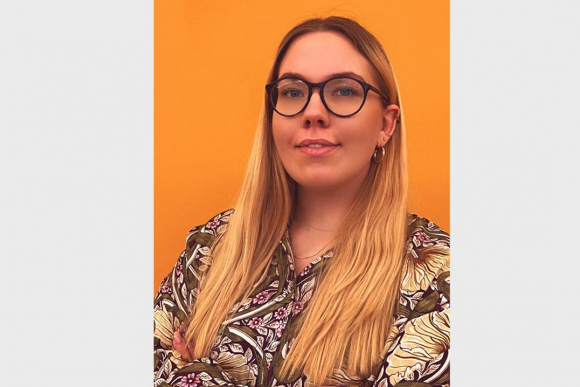
Fabienne Hofmeister
Having studied Political Science and German Studies, Fabienne Hofmeister is currently pursuing a degree in International Relations and Diplomacy at Trier University. Alongside her role as Chair of the think tank IFAIR e.V., she serves as Managing Director of the SPD parliamentary group on the Waldeck-Frankenberg district council. Her work focuses on foreign and security policy, with particular emphasis on hybrid threats and disinformation.
The Young Initiative on Foreign Affairs and International Relations (IFAIR) e.V. helps young people shape the international relations of tomorrow. To this end, IFAIR regularly launches project calls, offers a platform for exchange through its Open Think Tank [www.ifair.eu](https://www.ifair.eu), and connects its members with key players from the field.