When AI Books the Holiday
Tourism Trends 2026

Nowhere are developments in tourism more visible than at ITB, the world’s leading travel trade show. From 3 to 5 March 2026, it will once again open its doors in Berlin – this year for the sixtieth time.
Some 5,800 exhibitors from more than 170 countries and regions will be represented. Over 400 international speakers will present future-ready business models and debate the key challenges facing the global tourism industry. Diplomatisches Magazin spoke with Deborah Rothe, Director of ITB, about current developments and trends in tourism.
Diplomatisches Magazin
Ms Rothe, consumers are already using artificial intelligence to support their travel planning and booking. Will AI agents take over the entire service in future?
Deborah Rothe
At the ITB Berlin Convention there is a dedicated AI track featuring sessions on artificial intelligence, including agentic commerce, where AI systems increasingly work together in interconnected networks, combining advice, decision-making and execution within a seamless workflow. AI will evolve from being a mere “planning assistant” into an active travel companion. In the future, AI agents could take preferences and context into account, curate offers, check availability, compare alternatives and trigger bookings – including payment, rebooking or cancellation.
Proactive support throughout the journey is also conceivable: automatically suggesting alternatives in the event of delays, adjusting onward services or consolidating communication.
Diplomatisches Magazin
ITB also addresses key future issues facing the global tourism industry. What are these?
Deborah Rothe
Under the theme “Leading Tourism into Balance”, the ITB Berlin Convention brings together some of the sector’s most pressing questions. These include how to achieve growth in harmony with local acceptance, sustainability and fair value creation; how tourism can remain resilient in a crisis-prone world – the so-called “polycrisis”.
And what regenerative tourism means, namely not just protecting destinations but actively strengthening them. We also explore how travel motivations and expectations are changing, for example towards experiential travel as well as longevity and wellbeing, and how responsible tourism, inclusion and long-term competitiveness can be translated into actionable strategies.
Diplomatisches Magazin
What technological innovations and mega-trends can trade visitors expect?
Deborah Rothe
At ITB Berlin 2026, the key mega-trends are most evident in the travel technology segment, which is strongly represented by providers across six halls and shapes the entire customer journey. The focus is on artificial intelligence – particularly agentic commerce – new distribution and retailing models, and data-driven ecosystems that interconnect systems and processes.
Payment solutions and “seamless travel” are gaining importance, enabling smooth processes from the first point of contact through to booking. At the ITB Berlin Convention, the Travel Tech Track and the AI Track set clear priorities. Networking areas such as the ITB Späti in Hall 7.2c provide space for exchange, while innovation pitches by the ITB Innovators showcase new ideas. Our guided trade visitor tours also offer very practical insights into technological developments.
Diplomatisches Magazin
What trends can be observed among airlines and cruise operators?
Deborah Rothe
Cruise operators, in particular, are strongly represented at ITB Berlin and play a major role in shaping discussions around current industry developments. In aviation, we see that more efficient, fuel-saving aircraft are making new routes economically viable. Air Canada, for example, is launching a new connection from Montréal to Berlin. Another example is Etihad, which has introduced a new service from Abu Dhabi to Düsseldorf – a route that may not previously have been commercially attractive. The same applies to a new connection to Luxembourg. In the cruise sector, expectations around transparency and credibility in sustainability are rising. Shipping companies are increasingly focusing on concrete technical and operational measures, such as new propulsion systems or alternative fuels, shore power capability and more efficient operating processes.
At the same time, the dispersal of port calls is becoming more important: alternative ports, different time slots and smarter route planning are intended to relieve pressure on heavily frequented hotspots such as Venice or Dubrovnik.
Diplomatisches Magazin
Which strategies are proving successful in destination management?
Deborah Rothe
Above all, successful strategies are those that focus on balance. Visitor management helps to distribute flows, ease peak periods and reduce pressure on hotspots. The acceptance of the local population is crucial – tourism only works if it is perceived as adding value.
Data-driven management, and in future AI-supported approaches, help to identify patterns at an early stage and tailor measures more precisely. Cooperation is also gaining in importance: platforms such as Airbnb, a premium partner of ITB Berlin, promote nature-based offers and strengthen rural regions. Seasonal management – for example in Crete in cooperation with Aegean Airlines – and targeted support for lesser-visited regions, such as Spain’s green north, help to steer visitor flows in a sustainable way. In the ITB Convention session “City Destinations under Pressure”, cities, policymakers and industry representatives discuss how tourism can support vibrant city centres, effective mobility and sustainable urban development.
Diplomatisches Magazin: Thank you very much for this interview, Ms Rothe.
Official Partner Country of ITB Berlin 2026
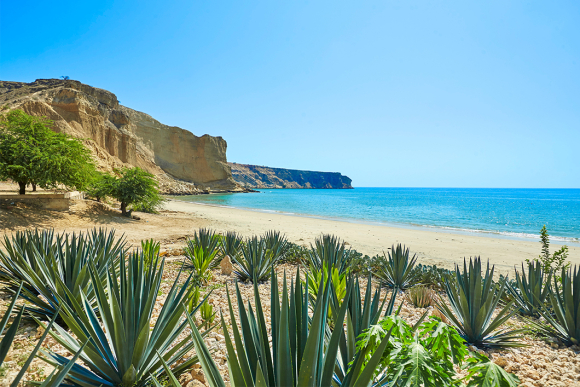
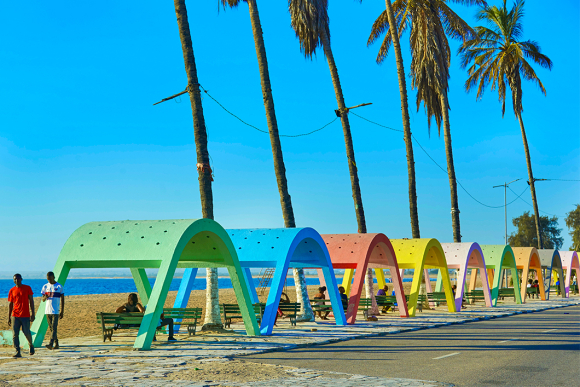
Angola – The Rhythm of Life
For the 60th edition of ITB Berlin, Angola is presenting itself as the official partner country. The photographs show the scenic diversity of the south-west African country – from the Atlantic coast to the vastness of Namibe Province and the striking rock formations of Pedras Negras.