Interview with Barbara Gessler, Head of the European Commission Representation in Germany
Under pressureHow Europe protects its democracies
Democracies in the EU are facing major challenges: extremism, interference in elections, the spread of manipulative information, threats against journalists. The EU is trying to combat these challenges. Barbara Gessler, who has been heading the European Commission’s representation in Germany since March 2024, spoke to Diplomatisches Magazin about the action plan to defend democracies.
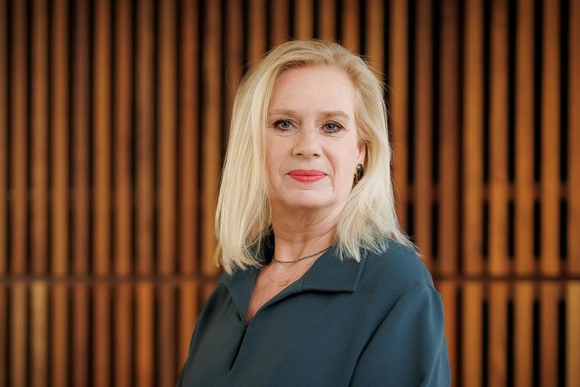
Barbara Gessler
Head of the European Commission Representation in Germany
© European Union / Dirk Lässig
DMMs Gessler, the European Democracy Action Plan aims, among other things, to combat election interference. Who interferes in elections in European democracies, what are their goals, and how can manipulation be proven?
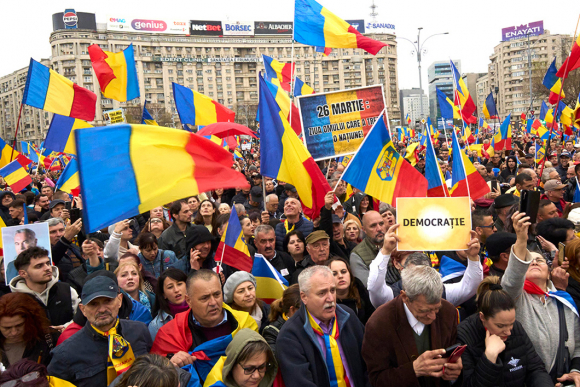
Barbara Gessler Free and fair elections are the cornerstones of our democracy. And we must not be naive: authoritarian regimes see democracy as a threat. That is precisely why some of these regimes are now undermining democratic processes in the EU. They want to undermine our institutions, they exert pressure on the media, they sow hatred and mistrust. Information is manipulated, election campaigns are influenced, and cyberattacks are launched against individual politicians or even institutions such as the Bundestag. Russian President Putin knows exactly how to stir up fears among us. And it is not only his state-run troll factories that have been tirelessly implementing this strategy for some time now. With Russia’s invasion of Ukraine, the risk of covert external influence has increased further. We are talking about both hostile governments and non-state actors attacking our democratic systems. The most recent example is Romania, where there are clear indications that foreign actors interfered in the presidential elections with the help of TikTok. The Commission has responded decisively and a formal investigation into TikTok is underway under the Digital Services Act. This involves the obligation of platforms to assess and mitigate systemic risks to ensure clean elections. Two points are central here: Was political advertising disseminated even though TikTok prohibits this in its terms and conditions? And: Were algorithms deliberately manipulated, for example, and did fake accounts covertly influence or distort social discourse?
DMWhat countermeasures is the EU taking? How is it promoting free, fair and stable elections?
Barbara Gessler We live in a new digital reality, which means that we must also move with the times and adapt our security measures to protect our free and fair elections. Some things have already been done, such as the package to defend democracy that we launched ahead of the 2024 European elections. This includes new transparency rules for foreign interest groups to scrutinise covert influence by third countries. And we are going further: the Commission is preparing a European shield for democracy. There are good examples, such as the Viginum authority in France and the Swedish Psychological Defence Agency. We can learn from them how to better and more effectively detect, analyse and proactively combat disinformation, information manipulation and influence via the internet.
DMWhat kind of disinformation are you referring to? Who spreads it? In what form?
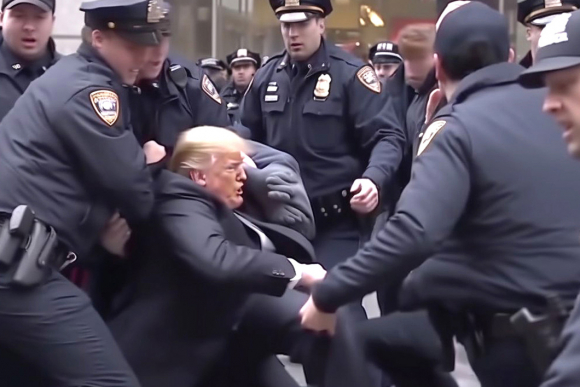
Barbara Gessler Sometimes you get the impression that disinformation was only invented in the recent past, but of course, the phenomenon is ancient. What is new is not so much the content, but the methods used and also the speed. With digitalisation, completely different channels are available, such as social media, websites and information portals. And the toolbox for how these channels can be used offers a wide variety of methods: for example, we see ‘doppelganger campaigns’ in which the websites of well-known media outlets – Spiegel, FAZ or BILD – are copied and faked. This is then used to spread pro-Russian propaganda. Or deepfake videos showing statements by politicians that were never made – AI makes it possible. Added to this are bot networks and fake user accounts that amplify discrediting messages. One more comment: we tend to talk about information manipulation rather than disinformation. This is because the actors involved are interested in manipulating public opinion, spreading false or misleading information and causing confusion.
DMHow can manipulative information be recognised and how is the EU combating it?
Barbara Gessler First and foremost, it is a matter of ‘situational awareness’. This means collecting, analysing, uncovering and clarifying data. The European External Action Service’s East StratCom Task Force has already achieved a great deal in this regard, especially in raising awareness. The EU is also at the forefront of regulation with the DSA, the Digital Services Act, a series of other initiatives and the Code of Practice on Disinformation with its clear rules for platforms. Resilience in all its facets is also very important: from civil society initiatives and fact-checking to journalistic competence and independence and educational initiatives.
DM Thank you very much for this interview, Ms Gessler.
Barbara Gessler
She has worked in EU institutions and the private sector for almost three decades, with a focus on education and culture. From 2004 to 2009, she was the Commission’s regional representative in Bonn, and since March 2024 she has headed the European Commission Representation in Germany.