The hidden power within our bodies
How the Microbiome Shapes Our Health
17 July 2026
© Adobe Firefly · Generated with AI
What is a microbiome?
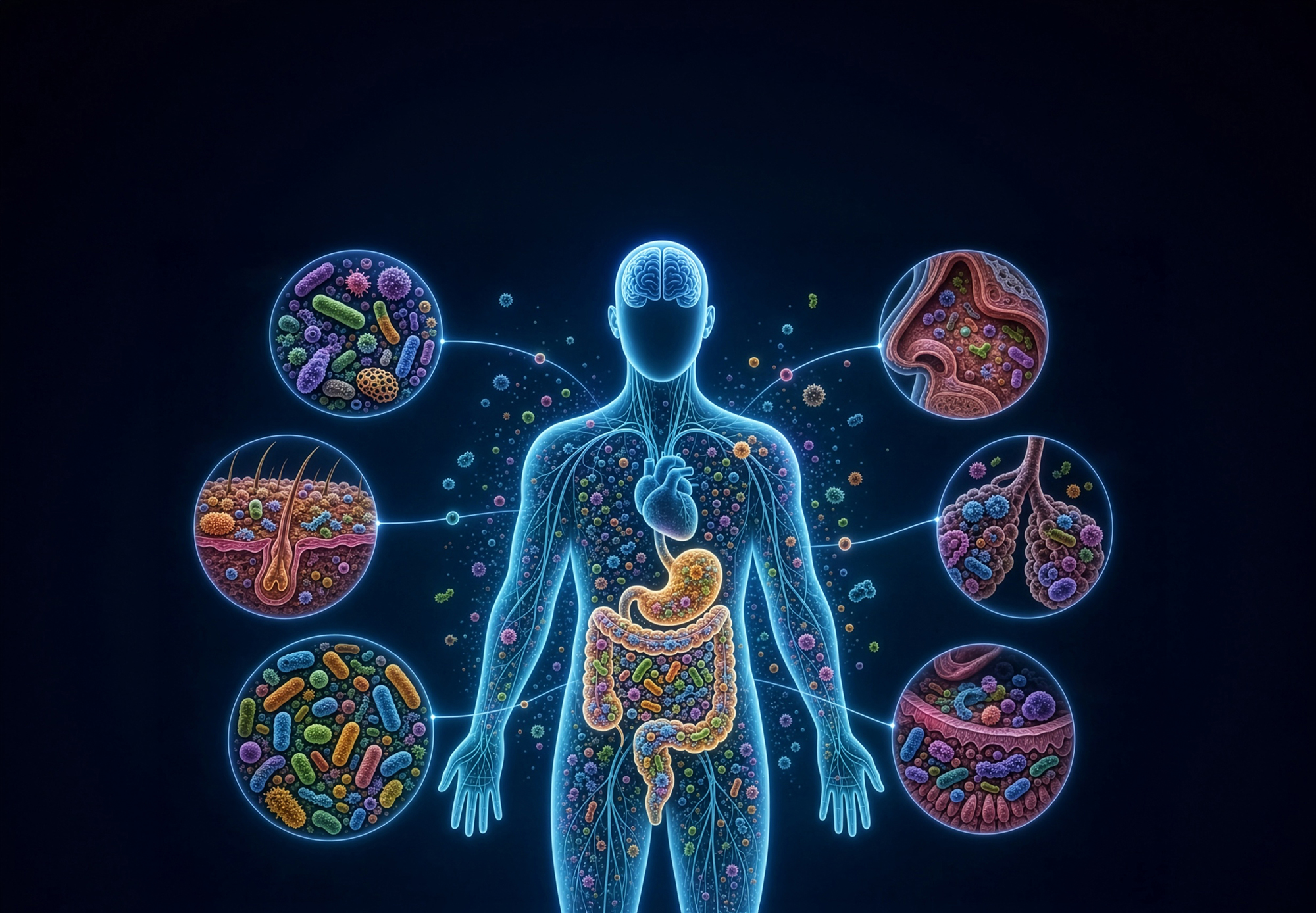
The microbiome refers to the totality of all microorganisms and their genetic material that live on and within our bodies. This includes billions of bacteria, viruses, fungi and other microbes. These tiny ‘roommates’ perform important functions: they aid digestion, produce vitamins, train our immune system and protect us from disease-causing germs. They are found not only on our skin but also on our mucous membranes in the gut, the respiratory tract and the urinary tract. The largest and most diverse community is found in the gut. A balanced microbiome, with its complex ecosystem, therefore makes a significant contribution to our general health. If this balance is disrupted, it can trigger or contribute to various ailments and diseases.
Is a person’s microbiome unique in the world?
The microbiome is, in fact, as individual as a fingerprint and is completely unique. Even identical twins differ in terms of their microbiome. However, the composition of the microbiome changes over the course of a lifetime and is influenced by internal and external factors. For example, frequent use of antibiotics affects the composition of the microorganisms, which then ‘fall out’ like gaps in a set of teeth, and these gaps can hardly ever be filled again. Diet, environmental factors, medication and personal lifestyle also influence how well our microbiome functions. The underlying common pattern fulfils important functions in digestion, metabolism, vitamin production, the so-called gut-brain axis and the immune system. These are exciting avenues for personalised medicine.
© Adobe Firefly · Generated with AI
How can the microbiome be supported, and what is harmful to it?
In particular, a healthy gut microbiome can be supported by a varied diet rich in fibre, whole grains, vegetables and fruit. Fermented foods can also have a positive effect, as can getting enough sleep, regular exercise, and limiting your intake of sugar and stimulants. The microbiome influences the utilisation of nutrients, plays a part in the production of various vitamins, regulates energy balance and is connected to the brain via nerves, hormones and neurotransmitters. So the notion of a ‘good gut feeling’ isn’t all that far-fetched after all.
Is regulating the microbiome the treatment of the future?
Indeed, the microbiome is regarded as a promising approach for the medicine of the future, as it influences and regulates many processes in the body. Researchers worldwide are currently investigating whether targeted changes to the microbiome can prevent diseases and aid recovery. We will not be able to do without medicines in the foreseeable future, but personalised ‘helping people to help themselves’ will play an increasingly important role in the future. At present, it serves as a personalised complement to standard therapies, but developments in research represent an exciting new chapter in medicine.