President of the Federal Office for Information Security (BSI)
Claudia Plattner
Protection Against Cyber Attacks?
A Cyber Dome for Germany
15 June 2026
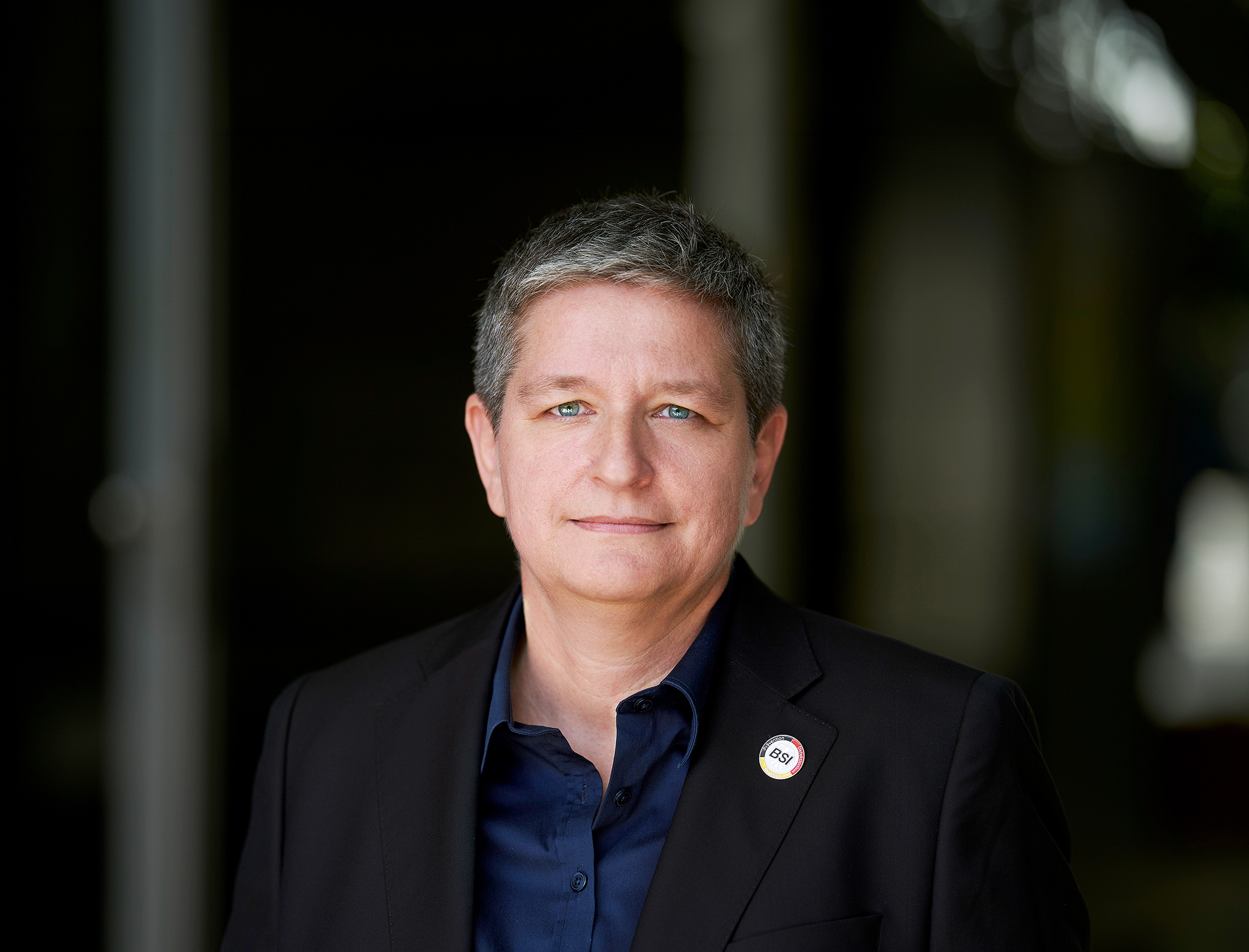
© BMI / Henning Schacht
In Germany, responsibility for protecting digital systems, networks and data from cyber attacks lies with an authority bearing the rather unwieldy name Federal Office for Information Security (BSI). What forms these attacks take, who is behind them, and how the BSI intends to counter them – these are the questions Diplomatisches Magazin put to the agency’s President, Claudia Plattner.
- DM: Ms Plattner, how would you assess the current state of cyber security for businesses? Who is targeting them, and in what ways?
-
Claudia Plattner: The cyber security landscape in Germany is generally tense, and this is particularly true for the business sector. The greatest damage continues to stem from ransomware attacks, in which perpetrators lock systems using malicious software and demand payment for their release. Broadly speaking, we distinguish between three forms of cyber aggression: First, cybercrime – criminal activity in the digital sphere, primarily driven by financial motives. Second, cyber conflict – state-directed attacks with ideological, political or military objectives. Third, cyber dominance – the exertion of influence through digital products that grant manufacturers access to information and functionalities.
Artificial intelligence plays a central role on both sides – attackers and defenders alike. It enables aggressors to operate with greater speed and sophistication. At the same time, it strengthens our ability to secure digital attack surfaces and mount effective cyber defences. AI tools allow us to detect and assess anomalies more rapidly – and to respond accordingly. Ultimately, the principle is clear: only those who master this key technology of digital transformation will be capable of ensuring security.
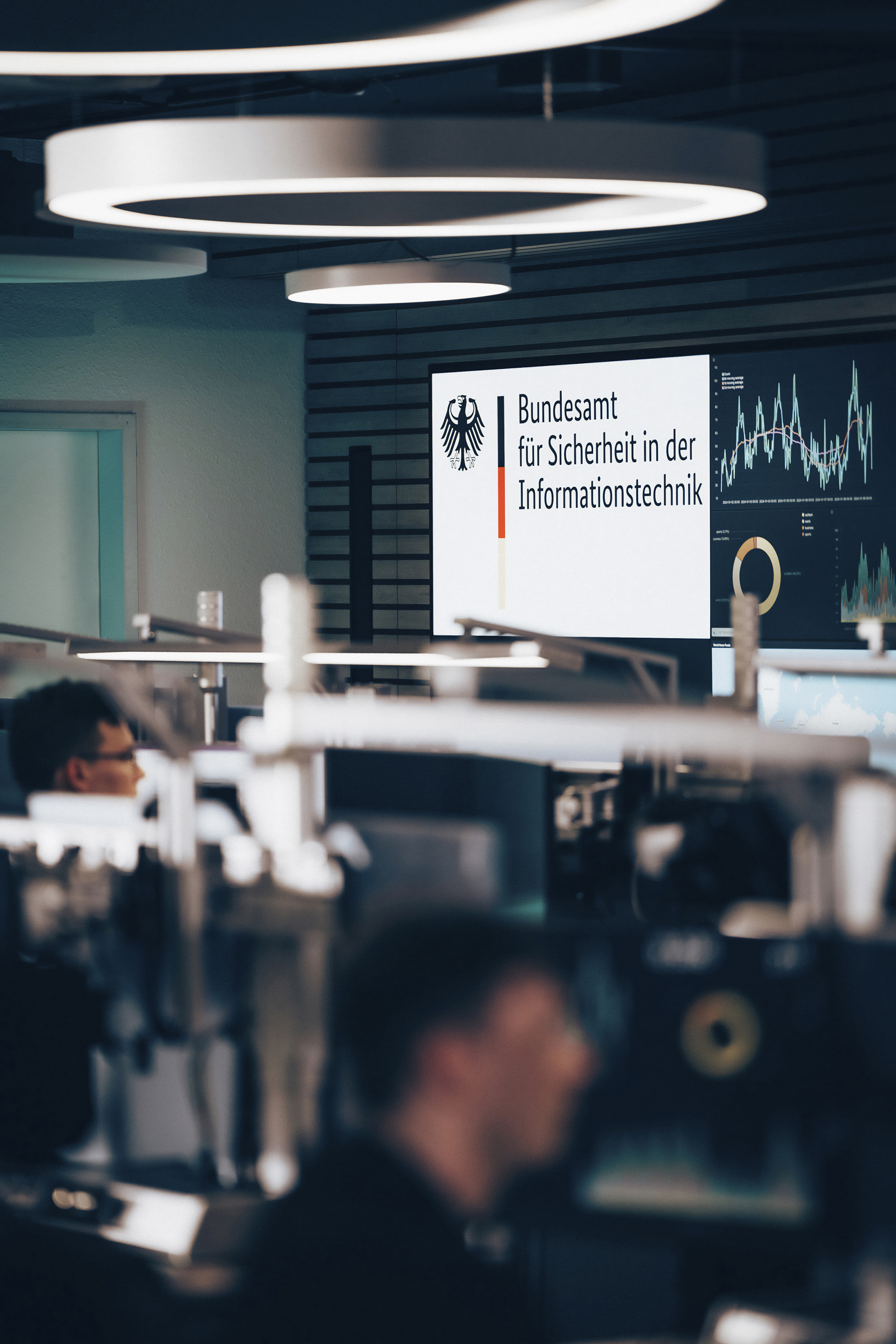
© BSI / Bernd Lammel/bundesfoto
- DM: Public administrations, authorities and critical infrastructures are also under threat. Who is targeting them, and to what end?
-
Claudia Plattner: Germany is, in general, an attractive target for cyber attacks. We must recognise that any institution or individual accessible via the internet is, in principle, vulnerable. Attackers deliberately seek out the weakest points of entry. Put simply: they first identify where they can gain access, and only then decide what damage they can inflict.
With the legislation implementing the European NIS-2 Directive (which obliges organisations in critical sectors to strengthen their cyber security, editor’s note) Germany has reached an important milestone on the path towards becoming a resilient cyber nation. It will ensure that a significant portion of our digital attack surface is far better protected than before.
- DM: What can the BSI do – both preventively and once an attack has already occurred?
-
Claudia Plattner: The most important step currently in countering cybercrime is the targeted automation of security measures. In this context, we are working closely with the Federal Ministry of the Interior and Community to develop a Cyber Dome for Germany – a digital protective shield capable of detecting, analysing and repelling cyber attacks at an early stage through automated mechanisms. It is designed as a robust defensive architecture against espionage and sabotage, and for the protection of critical infrastructure. At the BSI, we are already consolidating capabilities, resources and expertise for the establishment of such a Cyber Dome – particularly in situational awareness, threat intelligence, incident response and the protection of critical infrastructure.

© BSI / Bernd Lammel/bundesfoto
- DM: What is the role of the National IT Situation Centre, and how does it operate?
-
Claudia Plattner: The BSI’s National IT Situation Centre operates around the clock, monitoring and assessing developments in the digital space. It provides a comprehensive, real-time overview of Germany’s cyber security posture and enables informed decision-making in response to IT security incidents across both government and industry. This allows us to identify emerging threats at an early stage and respond swiftly. In exceptional situations and crises – such as major cyber incidents – the Situation Centre expands into a National IT Crisis Response Centre.
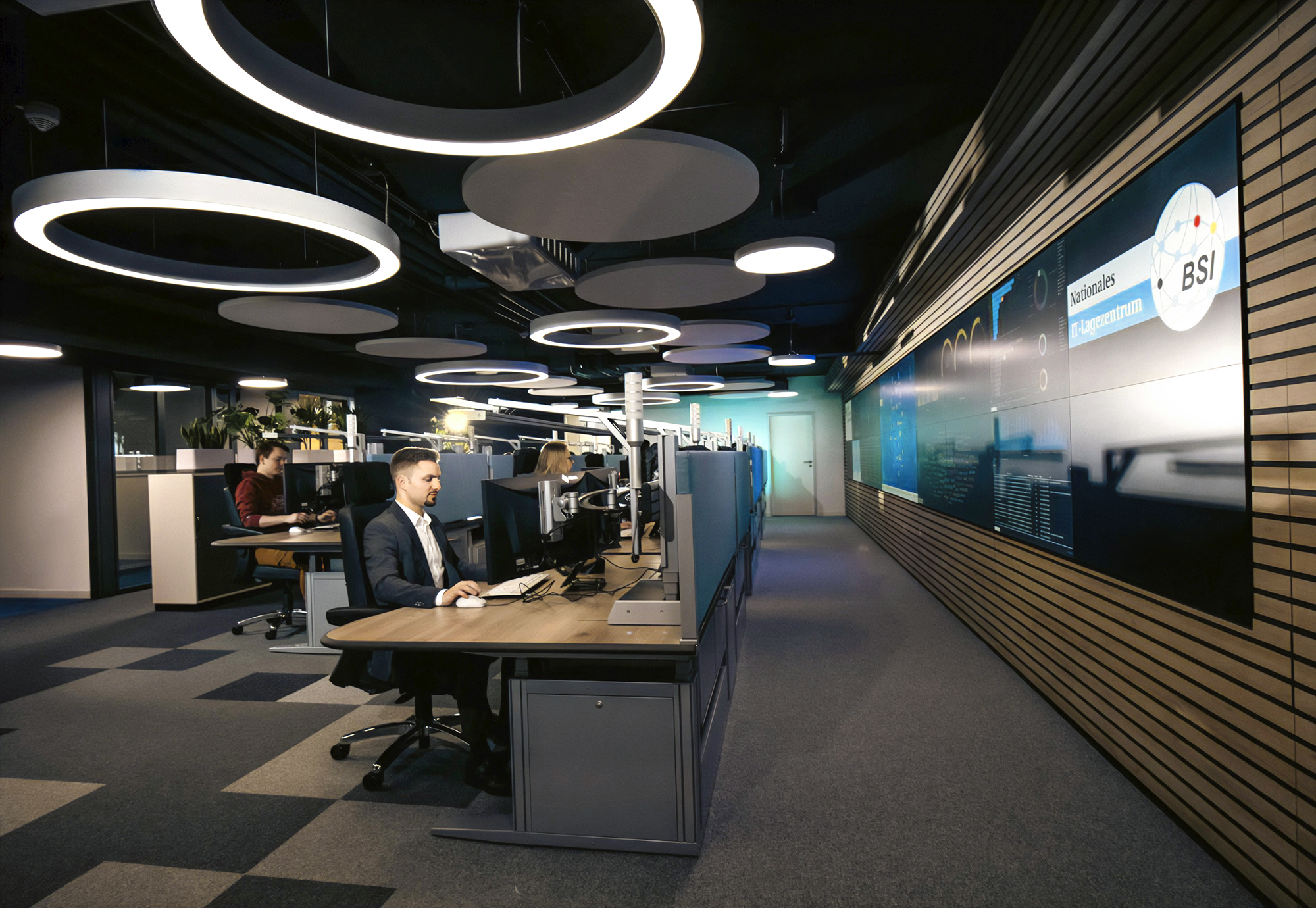
© BSI / Bernd Lammel/bundesfoto
- DM: Finally, a question we have posed to several of our interviewees: Bill Anderson, CEO of Bayer, recently remarked on the regulation of AI: “We need shaping, not regulation… I consider the EU’s AI Act – its attempt to regulate innovation in AI – a mistake. How can one regulate something that does not yet exist?” What is your response?
-
Claudia Plattner: First, it is important to draw a distinction: the EU’s AI Act governs the use of artificial intelligence at the European level; it does not regulate innovation as such. That said, I fully agree that the emphasis must be placed on shaping developments.
At the BSI, we approach regulation with a strong sense of responsibility. Any regulatory measures are implemented in a manner that is as unbureaucratic and accessible as possible. That is our commitment – and one we are actively working to uphold.