Interview with Steffi Lemke, German Environment Minister
“Prepared for the consequences of the climate crisis...”On Germany’s new climate adaptation law
Drought and floods – Germany has been experiencing more and more extreme weather conditions in recent years. In order to be better prepared for the consequences of the climate crisis in the future, the German government has introduced the first Climate Adaptation Act. Federal Environment Minister Steffi Lemke talks to Diplomatisches Magazin about what the law means in detail.
DMThe first nationwide climate adaptation law came into force in July. Why this law, why now?
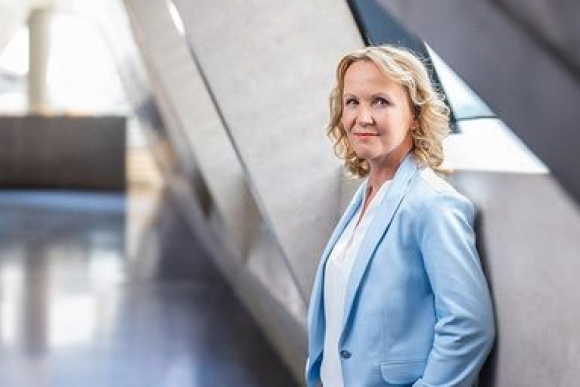
Federal Environment Minister Steffi Lemke The time has come to give Germany a sustainable basis for adapting to climate change. In recent years, we have increasingly felt the effects of the climate crisis in Germany, with serious consequences for people and high economic losses. Just at the beginning of the summer, people in parts of southern Germany had to cope with heavy rainfall and flooding. We must not let up in our efforts to protect the climate, while at the same time taking precautions against risks and adapting to the consequences of the climate crisis. With the first Climate Change Adaptation Act, we are helping people on the ground to better prepare for the consequences of the climate crisis and to take precautions against risks. We have now created the conditions for federal, state and local authorities to respond to the challenges of the climate crisis in a tailor-made way.
DMWhat does the law mean in concrete terms for the federal states and local authorities? What are they obliged to do?
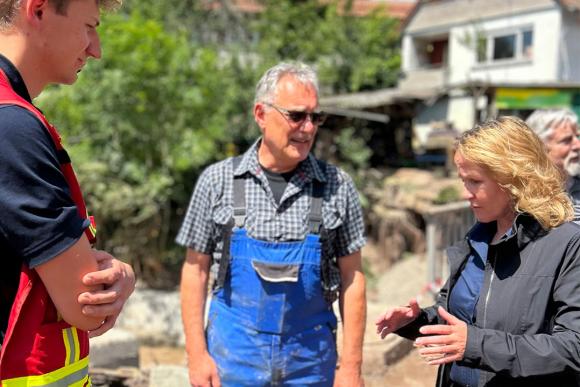
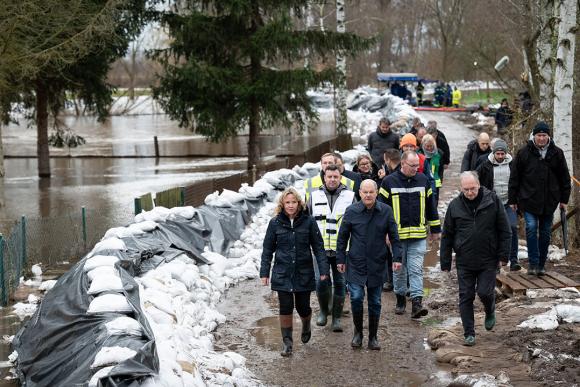
Federal Environment Minister Steffi Lemke The new law makes climate adaptation a legally enshrined task for federal states and local authorities for the first time – to protect people from the effects of the climate crisis, such as heat and flooding. We need good flood protection and more natural climate protection. For risk prevention and targeted climate adaptation measures, it is important to clearly regulate which level of government must act where.
In addition, the consequences of the climate crisis must be taken into account in future planning and climate adaptation concepts must be developed locally. These and other precautionary measures against the consequences of the climate crisis are the order of the day in view of extreme weather events such as heavy rain and heat. Within the scope of its possibilities, the federal government supports local authorities with funding, including for the deployment of climate adaptation managers and for innovative model projects for climate adaptation. Cities and municipalities also receive specialist advice and support from the experts at the Climate Adaptation Centre.
DMDoes the federal government support nature and agriculture (for example during extreme drought)?
Federal Environment Minister Steffi Lemke Agriculture and forestry in particular are dependent on an intact natural environment. Healthy soils absorb more water during heavy rainfall and are better able to store water for times of drought than degraded soils. This applies equally to well-functioning ecosystems such as forests, floodplains and moors. This is precisely where the Natural Climate Protection Action Programme comes in, with long-term measures to protect the natural foundations of life.
This is a real paradigm shift. In this way, we are protecting agriculture, forestry and infrastructure from the climate crisis that is already unfolding before our eyes. There are also environmental measures within the framework of the Common Agricultural Policy. There is a high synergy potential here between sustainable and organic farming, landscape structure elements, the strengthening of natural soil functions and the integration of water reservoirs and groundwater recharge. There is support for acute extreme weather events in the form of specific aid from the federal states and, in special cases, from the federal government. But in the long term, adapting to the consequences of the climate crisis and new climatic conditions is the best precautionary measure.
DMLocal authorities already have barely enough financial resources to fulfil their mandatory tasks. How are they supposed to shoulder these additional tasks?
Federal Environment Minister Steffi Lemke In fact, we also need to put the financing of climate adaptation on a new footing. Up to now, most of the climate adaptation tasks have been the responsibility of the federal states and local authorities. The federal government can currently only finance climate adaptation within the very narrow limits set by the Basic Law. I want to change that. We are working with the federal states on joint, long-term funding for climate adaptation.
It is good that the Conference of Environment Ministers has spoken out in favour of a joint task for climate adaptation. We must now work purposefully to create the conditions for stable funding for this important task.
DMWhat does the National Water Strategy say?
Federal Environment Minister Steffi Lemke Water is our most important foodstuff, our most important asset. We must do everything we can to protect our water – for ourselves and for future generations.
Like our neighbouring countries, Germany faces considerable challenges in this regard. The consequences of the climate crisis for people and nature are forcing us to act. The past years of drought have left clear traces in our forests, lakes and rivers and in agriculture. Extreme weather events are occurring more and more frequently and pose major problems for local authorities and countries. Despite many successes, the issue of water pollution is also far from over.
With our National Water Strategy, we are pursuing a clear goal: clean water must always be sufficiently available everywhere in Germany. To achieve this, we need to keep more water in the landscape, make our groundwater, lakes, streams and rivers cleaner, adapt our infrastructure, land use and urban development to the consequences of the climate crisis and store water better in the landscape.
DM Thank you for this interview.